
For children on the autism spectrum, color isn’t just about visual appeal—it’s a powerful sensory input that can shape mood, focus, and emotional regulation. The right hues can create a calming environment, while the wrong ones may trigger overstimulation. Sensory toys that incorporate carefully chosen colors offer controlled visual and tactile experiences, supporting developmental growth and emotional well-being.
Understanding which colors work best for autistic children involves observing individual reactions. While soft blues and greens often soothe, vibrant tones might energize or overwhelm. The key is balance: pairing colors with textures, sounds, and interactive elements to create a holistic sensory experience. Below, we explore the top colors for autistic kids and the sensory toys that bring them to life—helping parents and caregivers make informed choices.
Why Color Matters for Autistic Children
Color perception in autism is deeply personal. Research from the National Institute of Mental Health suggests that sensory processing differences can make certain colors more comforting or distracting. Cooler tones like blues and greens are frequently cited as calming, while warm, bright colors may either stimulate or overwhelm, depending on the child.
In practice, autistic children often respond well to:
- Muted, pastel shades (e.g., lavender, soft blue) for relaxation.
- High-contrast colors (e.g., black and white) for visual clarity in learning tools.
- Earthy tones (e.g., olive green, beige) for grounding effects.
A common mistake is assuming all autistic children prefer the same palette. Instead, observe their reactions to different hues and adjust accordingly. For example, a child who avoids bright red might thrive with deep blue sensory tools.
For more on sensory support, explore essential tools for kids with autism.
The 5 Best Colors for Autistic Kids (and Why They Work)
1. Soft Blue: The Universal Calmer
Why it works: Blue is widely recognized for its soothing properties. Light blues mimic the sky or water, evoking tranquility, while deeper shades can provide a sense of stability. Studies show blue environments reduce heart rates and lower stress levels.
Best for:
- Bedtime routines (e.g., blue-tinted nightlights or projectors).
- Focus-intensive activities (e.g., blue fidget spinners or sorting toys).
- Sensory rooms with blue walls or decor.
Toy Example: Calming sensory light projectors with ocean-wave effects in blue hues help create a serene atmosphere for sleep or relaxation.
 Projector casting soothing blue ocean waves onto a wall.
2. Gentle Green: Nature’s Balance
Why it works: Green, especially in softer shades like mint or sage, is associated with nature and balance. It’s less likely to overstimulate and can promote concentration and emotional equilibrium.
Best for:
- Outdoor-inspired play (e.g., green textured sensory balls).
- Learning tools (e.g., green-backed flashcards for color association).
- Tactile toys with natural themes (e.g., leaf-shaped fidgets).
Toy Example: Squishy green shape toys filled with rubber beads offer tactile input while reinforcing color recognition.
 Squishy green shapes for tactile and visual learning.
3. Lavender: The Subtle Soother
Why it works: Lavender and other pastel purples combine the calming effects of blue with a touch of warmth. They’re ideal for children who need gentle stimulation without overwhelming brightness.
Best for:
- Emotional regulation tools (e.g., lavender-colored emotion-sorting toys).
- Portable fidgets (e.g., lavender gel-filled squeeze toys).
- Bedroom decor to create a peaceful retreat.
Toy Example: A 4-pack of lavender and pastel-colored fidget toys provides quiet, calming tactile input.
 Soft lavender fidget toys for fine motor skill development.
4. Neutral Beige/Tan: The Grounding Choice
Why it works: Neutral tones like beige, tan, or soft gray minimize visual noise, making them perfect for children sensitive to bright or clashing colors. They provide a blank canvas for other sensory inputs.
Best for:
- Background colors in play areas (e.g., beige play mats).
- Sensory bins with natural fillers (e.g., sand or rice in neutral tones).
- Combining with other colors to avoid overstimulation.
Toy Example: A neutral-colored sorting tray paired with vibrant inserts allows children to focus on one color at a time.
5. High-Contrast Black and White: Clarity for Visual Learners
Why it works: While not a single color, high-contrast black-and-white patterns are excellent for children who need clear, structured visual input. They help with focus and can be less overwhelming than bright colors.
Best for:
- Visual tracking activities (e.g., black-and-white striped fidgets).
- Educational tools (e.g., high-contrast flashcards for shape recognition).
- Sensory boards with alternating patterns.
Note: Some autistic children may find stark contrasts overstimulating. Test their response before full integration.
For additional ideas on engaging activities, check out top activities for kids.
Top Sensory Toys by Color Category
For Soft Blue Lovers
Product: Calming Sensory Lights Projector
- Why it stands out: Projects customizable blue ocean waves, ideal for bedtime or sensory rooms.
- Key Features:
- 7 color patterns (including blues and greens).
- Remote-controlled for easy adjustments.
- USB-powered for portability.
- Best for: Children who need visual calming before sleep or during transitions.
Ocean wave projector with customizable blue and green hues.
User Tip: Pair with a blue-weighted blanket for a full sensory retreat.
For Gentle Green Enthusiasts
Product: 6-Piece Squishy Shape Set
- Why it stands out: Combines tactile beads with vibrant green shapes for hands-on learning.
- Key Features:
- 6 shapes (triangle, square, hexagon, circle, heart, star).
- Soft rubber beads for squeezing and squishing.
- Leak-proof and portable (2.5–3 inches).
- Best for: Toddlers (1–3) developing fine motor skills and color recognition.
Green and multi-colored squishy shapes for tactile play.
Pro Tip: Use during calm-down time to help children self-regulate.
For Lavender and Pastel Fans
Product: LESONG 4-Pack Fidget Toys
- Why it works: Soft lavender and pastel gel-filled toys offer quiet, discreet tactile input.
- Key Features:
- ASTM F963-certified non-toxic materials.
- Ergonomic shapes for fine motor development.
- Leak-proof and portable.
- Best for: Older children who need subtle sensory tools in classrooms or public spaces.
Lavender and pastel fidget toys for on-the-go calming.
Parent Insight: Great for children who dislike loud or textured fidgets.
For more on inclusive play, see toys for kids with disabilities.
For Neutral Tone Seekers
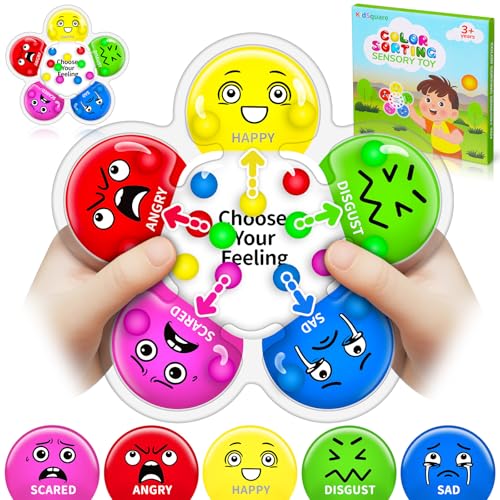
Product: Color Sorting Sensory Toy
- Why it works: Features a neutral base with colorful petals for emotion sorting.
- Key Features:
- Combines color recognition with emotional learning (happy, angry, scared, sad, disgust).
- Soft, tactile gel petals.
- Compact (6.5 inches) for travel.
- Best for: Children working on emotional vocabulary and fine motor skills.
 Neutral-based emotion-sorting toy with colorful petals.
Therapist Note: Use to discuss emotions in a structured, visual way.
For High-Contrast Learners
Product: 12-Piece Sensory Travel Pack
- Why it works: Includes black-and-white pop tubes alongside bright colors for variety.
- Key Features:
- 12 toys: LCD tablets, pop tubes, suction spinners, fidget balls, and sorting flowers.
- CPSIC-certified safe materials.
- Quiet and portable for travel.
- Best for: Children who enjoy diverse sensory inputs in one pack.
 Travel pack with high-contrast and colorful sensory tools.
Travel Hack: Keep in a backpack for waiting rooms or long car rides.
For additional travel-friendly options, explore essential products for kids' health recovery.
How to Choose the Right Colors for Your Child
Observe Reactions:
- Does your child gravitate toward certain colors in clothing or toys?
- Do they avoid or cover their eyes around bright hues?
Test in Small Doses:
- Introduce one new color at a time in a controlled setting (e.g., a single blue fidget toy).
Combine with Other Sensory Inputs:
- Pair colors with textures (e.g., a soft green blanket) or sounds (e.g., a white noise machine with blue lighting).
Prioritize Safety:
- Ensure toys are non-toxic, durable, and free from small parts (look for ASTM or CPSIC certifications).
Adapt Over Time:
- Preferences may change as your child grows. Reassess every few months.
Common Pitfall: Assuming a color is "universally calming." Always tailor to your child’s unique needs.
For more on adaptive tools, see sensory support for kids with autism.
FAQ: Colors and Autistic Children
Q: How do colors affect autistic children?
Colors influence sensory processing, mood, and behavior. Soft, cool tones (blues, greens) often calm, while bright or high-contrast colors may energize or overwhelm. Individual responses vary widely.
Q: What are the most calming colors for autistic kids?
Muted blues, greens, lavenders, and neutrals are typically soothing. Avoid fluorescent or overly saturated hues unless your child responds positively.
Q: Can bright colors be beneficial?
Yes, for some children. Bright colors can aid visual tracking and cognitive engagement, but monitor for signs of overstimulation (e.g., covering eyes, agitation).
Q: How do sensory toys use color effectively?
They combine color with tactile, auditory, or interactive elements. For example:
- Blue projectors create a calming visual environment.
- Green squishy toys offer tactile input with soothing hues.
- High-contrast sorting games improve focus and learning.
Q: What should I look for in sensory toys beyond color?
Consider:
- Texture: Soft, squishy, or firm?
- Sound: Silent or does it make noise?
- Safety: Non-toxic, durable, and age-appropriate.
- Portability: Easy to carry for on-the-go use?
Q: Can these toys help with emotional regulation?
Absolutely. Toys like emotion-sorting sets or fidget tools provide outlets for self-expression and stress relief. Color association (e.g., "blue = calm") can also aid communication.
Q: Are there colors to avoid?
No universal "bad" colors, but fluorescent reds, oranges, or yellows often overstimulate. Test your child’s reaction to be sure.
Q: Why is color sorting important for development?
It builds cognitive skills (classification, pattern recognition), fine motor skills, and emotional intelligence (e.g., matching colors to feelings).
For more on developmental toys, check out toys for kids with cerebral palsy.
Conclusion
Choosing the right colors for autistic children is about balancing soothing hues with engaging, multi-sensory experiences. Soft blues, gentle greens, lavenders, neutrals, and high-contrast patterns each offer unique benefits—whether for calming, focusing, or learning. The key is to observe your child’s reactions and adapt accordingly.
Next Step: Start with one or two sensory toys in colors your child already gravitates toward, then gradually introduce new hues to see what works best. For a curated selection, explore the top sensory support tools to find the perfect fit.