

Every child with autism experiences the world in a unique way, and the right sensory and support tools can make a profound difference in their daily lives. These specialized aids are designed to address specific needs—from sensory regulation and emotional expression to safety and routine management—helping children navigate their environment with greater confidence and comfort.
Whether you're a parent, caregiver, or educator, choosing the right tools can feel overwhelming. That’s why we’ve curated this list of 7 top picks, each selected for its ability to support sensory processing, communication, and independence. Below, you’ll find detailed insights into how these tools work, their benefits, and practical considerations to help you make informed decisions.
Why Sensory & Support Tools Are Essential
Sensory processing differences are common among children with autism, often leading to over- or under-stimulation. Tools like fidget toys, sensory tents, and visual schedules help regulate these experiences, reducing anxiety and improving focus. According to the Centers for Disease Control and Prevention (CDC), early intervention with tailored sensory supports can significantly enhance a child’s ability to engage in daily activities and social interactions.
These tools also foster independence by providing structure and predictability. For example, visual schedules help children anticipate transitions, while sensory brushes can be part of a calming routine. The key is to match the tool to the child’s specific needs—whether they seek deep pressure, tactile input, or a quiet retreat.
For families exploring broader support strategies, pairing these tools with other resources—like a reliable machine for noise sensitivity or eco-friendly STEM toys for structured play—can create a more holistic approach.
Our 7 Top Picks for Sensory & Support Tools
1. HAHASOLE Pop-Up Sensory Tent Set
A safe haven for sensory regulation, this 3-in-1 pop-up tent and tunnel set provides a private space for children to decompress, play, or retreat from overwhelming environments. Its durable, skin-friendly materials and quick assembly make it ideal for both indoor and outdoor use.
 Perfect for creating a calming corner at home or in a classroom.
Key Features:
- 3-in-1 design: Two tents + a connecting tunnel for versatile play.
- Easy setup: Assembles in under 5 minutes without tools.
- Portable: Folds into a compact bag for storage or travel.
- Therapeutic benefits: Promotes self-awareness, independence, and sensory integration.
Pros: ✔ Encourages imaginative play and self-regulation. ✔ Durable and safe for daily use. ✔ Lightweight and easy to move.
Cons: ✖ Requires ample space when fully assembled. ✖ May not accommodate larger pets comfortably.
Best For: Children who need a quiet, enclosed space to retreat and reset.
2. Autism & Prosperity Visual Schedule & Time Management Bundle
Predictability is crucial for many autistic children, and this visual schedule system helps reduce anxiety by clearly outlining daily routines. It includes a visual timer, customizable task cards, and a tick-free alarm for smoother transitions.
 Helps children understand their day with clear, visual cues.
Key Features:
- Customizable: Adaptable to individual routines and preferences.
- Visual timer: Limits screen time and signals transitions.
- Durable design: Laminated cards withstand frequent use.
- Reduces meltdowns: Clarifies expectations and reduces repetitive questions.
Pros: ✔ Empowers children with a sense of control. ✔ Ideal for home or classroom use. ✔ Supports independence in daily tasks.
Cons: ✖ Requires consistent use by caregivers for maximum benefit. ✖ May need simplification for children with low visual comprehension.
Best For: Families or educators looking to minimize anxiety around transitions and routines.
3. Lulaven Hidden AirTag Holder for Kids
Safety is a top priority for parents of children who may wander. This discreet AirTag holder secures an Apple AirTag inside clothing, allowing parents to track their child’s location without drawing attention.
 Discreet and lightweight for peace of mind in crowded places.
Key Features:
- Hidden design: Blends seamlessly with clothing.
- Anti-removal: Magnet unlocker prevents accidental detachment.
- Lightweight: Only 10g, comfortable for all-day wear.
- Secure fit: Edge thickening and adhesive strip hold the AirTag firmly.
Pros: ✔ Provides real-time tracking without visibility. ✔ Comfortable and non-intrusive. ✔ Ideal for active or wandering children.
Cons: ✖ AirTag sold separately. ✖ Not suitable for children under 3 (small parts).
Best For: Parents seeking a reliable, hidden tracking solution for outings.
4. Magic Water Elf Toy Kit – DIY Squishy Maker
This STEM-inspired sensory kit lets children create their own squishy, gel-based "water pets" using vibrant gels and reusable molds. It’s a mess-free, screen-free activity that promotes fine motor skills, creativity, and calming focus.
 Combines art, science, and sensory play in one engaging kit.
Key Features:
- 15 vibrant gels + 14 molds: Endless creative possibilities.
- Eco-friendly materials: Safe and non-toxic.
- STEM learning: Teaches cause-and-effect and color theory.
- Reusable: Airtight storage for repeated use.
Pros: ✔ Encourages tactile exploration and fine motor development. ✔ Calming and engaging for sensory seekers. ✔ Great for family bonding or independent play.
Cons: ✖ Requires adult supervision for younger children. ✖ Results may vary based on technique.
Best For: Children who enjoy hands-on, creative sensory play.
5. Autism & Prosperity Emotions & Social Skills Bundle
Understanding and expressing emotions can be challenging for autistic children. This visual, ASD-friendly toolkit includes an emotions flipbook, social skills cards, and durable laminated materials to help children identify feelings, navigate social cues, and reduce frustration-based behaviors.
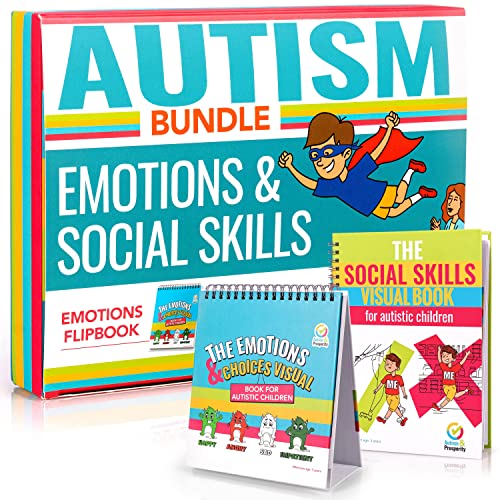 Designed to help non-verbal and verbal children communicate emotions effectively.
Key Features:
- Highly visual: Uses images and symbols for clarity.
- Emotions flipbook: Instant tool for expressing feelings.
- Social skills focus: Teaches appropriate interactions.
- Durable: Laminated pages for long-term use.
Pros: ✔ Reduces meltdowns and frustration by improving communication. ✔ Works for verbal and non-verbal children. ✔ Encourages social understanding and emotional literacy.
Cons: ✖ Requires parental or therapist involvement for best results. ✖ Not a standalone solution—works best as part of a broader strategy.
Best For: Children who struggle with emotional expression or social interactions.
6. Sensory Fidget Toy Set for Autistic Kids
Fidget toys are essential for sensory regulation, helping children manage anxiety, improve focus, and stay calm. This set includes water squishies, a sensory slug, and a rainbow ball, all designed for quiet, discreet use in classrooms or at home.
 Perfect for keeping hands busy and minds focused.
Key Features:
- Variety of textures: Caters to different sensory preferences.
- Quiet design: Ideal for classroom or public use.
- Portable: Easy to carry in a backpack or pocket.
- Safe materials: Non-toxic and durable.
Pros: ✔ Helps reduce anxiety and improve concentration. ✔ Encourages fine motor skill development. ✔ Highly portable for on-the-go use.
Cons: ✖ Some children may prefer specific textures over others. ✖ Small parts—supervise very young children.
Best For: Children who need tactile input to stay calm and focused.
7. Premium Silicone Sensory Brush
A cornerstone of occupational therapy, this dual-sided silicone brush provides deep pressure or light tactile input to help children regulate their sensory systems. It can be used for sensory brushing routines or as a fun bath toy.
 Gentle yet effective for sensory integration therapy.
Key Features:
- Dual-sided design: Offers light or deep pressure stimulation.
- Soft silicone: Comfortable for sensitive skin.
- 2-in-1 use: Doubles as a bath brush or scalp massager.
- Hygienic: Easy to clean and maintain.
Pros: ✔ Calms and organizes the nervous system. ✔ Improves body awareness and tactile processing. ✔ Versatile for therapy or daily routines.
Cons: ✖ Requires proper technique for therapeutic benefits. ✖ Some children may initially resist the sensation.
Best For: Children who benefit from deep pressure or tactile input for regulation.
How to Choose the Right Sensory Tool for Your Child
Selecting the best tool depends on your child’s specific sensory needs. Here’s a quick guide:
| Need | Recommended Tool | Why It Helps |
|---|---|---|
| Calming retreat | Pop-up sensory tent | Provides a safe, enclosed space to decompress. |
| Routine predictability | Visual schedule bundle | Reduces anxiety around transitions. |
| Safety tracking | Hidden AirTag holder | Offers discreet, real-time location tracking. |
| Tactile exploration | Magic Water Elf Toy Kit / Fidget set | Engages fine motor skills and focus. |
| Emotional expression | Emotions & Social Skills Bundle | Helps communicate feelings effectively. |
| Sensory regulation | Silicone sensory brush | Provides deep pressure or light touch input. |
Pro Tip: Observe your child’s sensory preferences. Do they seek deep pressure, avoid loud noises, or need visual structure? Start with one or two tools and adjust based on their response. For additional insights, explore resources on sensory-friendly tech or interactive learning tools.
Common Mistakes to Avoid
- Assuming one size fits all: A tool that works for one child may not suit another. Trial and error is often necessary.
- Overloading with too many tools: Introduce one at a time to avoid overwhelming your child.
- Ignoring safety: Always check for small parts, choking hazards, or age restrictions.
- Inconsistent use: Tools like visual schedules or sensory brushes require regular use to be effective.
- Neglecting professional guidance: Consult an occupational therapist for personalized recommendations.
FAQ: Your Questions Answered
Q: Why are sensory tools important for kids with autism?
Sensory tools help children process and regulate sensory input, which can be overwhelming or underwhelming for autistic kids. They provide calming or stimulating input to improve focus, behavior, and emotional well-being.
Q: How do visual schedules help autistic children?
Visual schedules reduce anxiety by making routines predictable. They help children anticipate transitions, understand expectations, and feel more in control of their day.
Q: Are these tools suitable for all ages?
Most tools are adaptable for different ages, but always check the recommended age range. For example:
- Fidget toys and sensory brushes work for young children to teens.
- Visual schedules can be simplified for toddlers or expanded for older kids.
- AirTag holders are best for children over 3 (due to small parts).
Q: What makes a toy "autism-friendly"?
Autism-friendly toys typically: ✔ Have clear cause-and-effect interactions. ✔ Provide specific sensory input (tactile, visual, auditory). ✔ Are durable and safe for repeated use. ✔ Encourage focus, fine motor skills, or communication without being overwhelming.
Q: How do sensory brushes benefit kids with autism?
Sensory brushes provide deep pressure touch, which can: ✔ Calm an overstimulated nervous system. ✔ Improve body awareness and reduce tactile defensiveness. ✔ Alleviate anxiety or hyperactivity as part of sensory integration therapy.
Q: How can I choose the right sensory product for my child?
- Observe their needs: Do they seek or avoid certain sensations?
- Consult a professional: An occupational therapist can provide tailored advice.
- Start simple: Choose versatile tools (e.g., fidget sets, sensory tents) and adjust based on their response.
- Prioritize safety: Ensure the tool is age-appropriate and durable.
Conclusion
The right sensory and support tools can transform daily life for a child with autism, helping them regulate emotions, communicate needs, and navigate the world with confidence. From calming sensory tents to discreet tracking devices and emotion-expression aids, each tool on this list addresses a unique challenge while fostering independence and well-being.
Next Step: Start with one or two tools that align with your child’s most pressing needs—whether it’s sensory regulation, routine structure, or safety—and observe how they respond. For more ideas, explore interactive learning tools or sensory-friendly tech to build a supportive environment tailored to your child’s strengths.