

Choosing the right toys for children with cerebral palsy (CP) goes beyond entertainment—it’s about fostering development, independence, and joy. The best toys for kids with CP are thoughtfully designed to support mobility, sensory exploration, fine and gross motor skills, and cognitive growth while keeping playtime engaging and safe.
This guide explores seven standout toys that combine therapeutic benefits with fun, helping children with CP build confidence and new abilities. We’ll also cover how to select the right toy for your child’s unique needs, safety considerations, and ways to integrate these tools into therapy goals.
Why Adaptive Toys Matter for Children with Cerebral Palsy
Cerebral palsy affects movement, muscle tone, and coordination, but adaptive toys can turn challenges into opportunities. These toys are engineered to:
- Enhance mobility (e.g., walkers, ride-on toys)
- Stimulate senses (e.g., light-up toys, musical instruments)
- Develop fine motor skills (e.g., adaptive cuffs, textured toys)
- Encourage cognitive growth (e.g., cause-and-effect toys, interactive games)
- Boost emotional well-being through inclusive, rewarding play
According to the Centers for Disease Control and Prevention (CDC), early intervention with the right tools can significantly improve a child’s ability to interact with their environment. The key is matching the toy to the child’s specific abilities and therapeutic goals.
For parents looking for more ways to support their child’s development, exploring eco-friendly STEM toys can also provide sustainable, engaging options.
7 Best Toys for Kids with Cerebral Palsy
1. Walkers for Disabled Children – Mobility Support with Stability
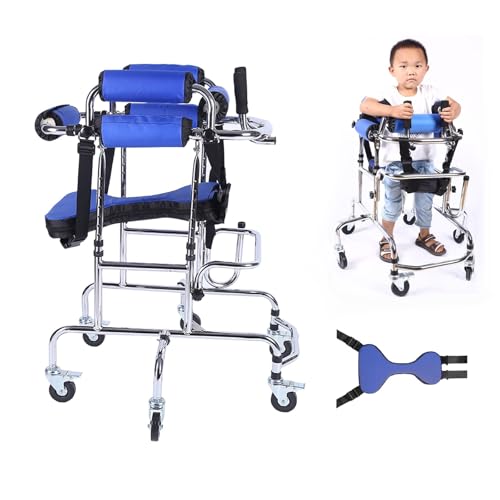 Adjustable walker designed for children with CP, featuring anti-skid wheels and a comfortable crotch cushion.
For children with CP who need mobility assistance, a foldable walking aid is more than a tool—it’s a gateway to independence. This walker is built with thickened stainless steel for durability and adjustable height/width to grow with your child (fits heights 80–120 cm / 32–48 in). Key features include:
- Anti-overturn design with widened chassis and double-sided safety wheels
- High-density sponge handrails for sweat absorption and grip support
- Soft, detachable crotch cushion for comfort during extended use
- Solid, wear-resistant tires with adjustable speed and braking
Pros: ✔ Encourages balance and gait training ✔ Highly customizable for different body sizes ✔ Sturdy construction (supports up to 310 lbs)
Cons: ✖ Heavy (25 lbs), may require two people for initial setup ✖ Higher price point than basic walkers
Parent Insights: Many caregivers report that this walker helps children gain confidence in movement, and the ease of adjustment makes it a long-term investment. For families exploring tech-based mobility aids, our guide on top smart air quality monitors can also help create a safer home environment.
2. Aywewii LED Tambourine – Multi-Sensory Musical Fun
 Vibrant tambourine with three flashing modes to engage visual and auditory senses.
Music and movement go hand-in-hand for sensory development. The Aywewii LED Tambourine combines bright LED lights (fast, slow, or alternating modes) with rhythmic sounds to create a cause-and-effect learning experience. Made from durable, non-toxic plastic (CPSIA-compliant), it’s perfect for:
- Fine motor skill practice (grasping, shaking)
- Color recognition and auditory stimulation
- Party or therapy sessions where engagement is key
Pros: ✔ Highly engaging for children with sensory processing needs ✔ Lightweight and portable ✔ Encourages rhythmic movement
Cons: ✖ Requires batteries (not included) ✖ Sound may become repetitive over time
Parent Insights: Therapists often use this tambourine to motivate movement in children with limited mobility. For more musical toy ideas, check out our list of top math game boards that blend learning with play.
3. Musfunny Ocean Drum – Calming Sensory Experience
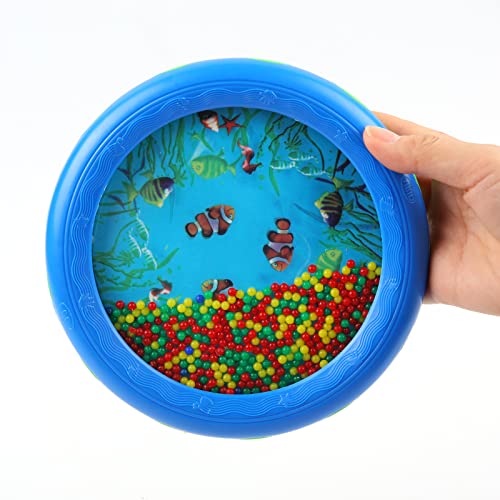 Gentle wave sounds created by swirling beads inside a translucent drum.
The Musfunny Ocean Drum offers a soothing auditory and visual experience, ideal for children who benefit from calm, focused play. Features include:
- Realistic ocean sounds from colorful plastic beads
- Bright colors and fish graphics to attract attention
- Smooth, polished edges (safe for babies)
- Lightweight design (18 cm diameter) for easy handling
Pros: ✔ Promotes listening skills and visual tracking ✔ Great for self-regulation and relaxation ✔ Durable and safe for all ages
Cons: ✖ Sound may be too subtle for some children ✖ Less interactive than motor-focused toys
Parent Insights: Occupational therapists recommend this drum for children with sensory sensitivities, as the gentle sounds can help with focus and emotional regulation.
4. EazyHold Silicone Adaptive Aid – Independence in Play & Daily Tasks
 Soft, stretchy silicone cuff that secures tools and toys to a child’s hand.
For children with limited grasp, the EazyHold Adaptive Aid is a game-changer. This universal cuff helps secure:
- Art supplies (paintbrushes, crayons)
- Utensils (forks, spoons)
- Toys (small balls, blocks)
- Personal care items (toothbrushes, hairbrushes)
Key Features:
- Soft, stretchy silicone that warms to skin temperature
- Sensory feedback from tool contact with skin
- Easy to clean (dishwasher, autoclave, or wipes)
- Multiple sizes (infants to adults)
Pros: ✔ Encourages independence in play and self-care ✔ Comfortable and non-restrictive ✔ Durable and hygienic
Cons: ✖ May require trial and error for the right fit ✖ Some children may initially resist wearing it
Parent Insights: Parents love that their children can hold objects they couldn’t before, like a LeapFrog Magic Adventures Telescope for stargazing or a favorite book.
5. Tumama Baby Musical Drum – Interactive Learning with Lights & Sounds
 Adorable drum with nursery rhymes, animal sounds, and adjustable volume.
The Tumama Baby Musical Drum is a multi-sensory powerhouse, offering:
- Nursery rhymes, lullabies, and animal sounds
- Colorful LED lights for visual stimulation
- Soft, round edges (safe for chewing)
- Adjustable volume (parent-friendly!)
Pros: ✔ Encourages hand-eye coordination ✔ Portable with a hidden handle ✔ Great for early cognitive development
Cons: ✖ Requires 3 AA batteries (not included) ✖ May be overwhelming for sound-sensitive children
Parent Insights: Many parents use this drum during tummy time to motivate reaching and grasping. For more interactive tech toys, our Amazon Fire HD 8 Kids Pro Tablet guide explores age-appropriate digital play.
6. ArtCreativity Light-Up Dancing Ball – Dynamic Sensory Stimulation
 Set of two balls that dance, roll, and sing with vibrant light shows.
The ArtCreativity Light-Up Dancing Balls are perfect for active play, featuring:
- Dancing, rolling, and rattling movements
- Bright LED light shows with sound effects
- Durable plastic cage and rubber exterior
- Batteries included (4 AA)
Pros: ✔ Encourages gross motor movement (reaching, crawling) ✔ Highly engaging for visual and auditory learners ✔ Great for group play or parties
Cons: ✖ May be overstimulating for some children ✖ Battery replacement can be tricky
Parent Insights: These balls are instant attention-grabbers, making them ideal for physical therapy sessions or playdates.
7. Awaiymi 4-Pack Silicone Adaptive Cuffs – Versatile Independence Tools
 Four universal cuffs with adaptable sizes and hole combinations for various objects.
Similar to the EazyHold but with more versatility, the Awaiymi 4-Pack includes:
- Two adaptable sizes with four hole combinations
- Food-grade, non-BPA silicone (skin-friendly)
- Non-slip, ergonomic grip for secure holding
- Easy to clean (soap, water, dishwasher, or autoclave)
Pros: ✔ Multi-pack offers great value ✔ Fits a wide range of objects (markers, toothbrushes, toys) ✔ Comfortable for extended use
Cons: ✖ Finding the right hole size may take experimentation ✖ Some children may need time to adjust
Parent Insights: Parents appreciate the ability to try different sizes until they find the perfect fit. For more adaptive tech, our robotic dog Aibo guide explores how robotic pets can support social and emotional development.
How to Choose the Right Toy for Your Child
Selecting the best toys for kids with cerebral palsy depends on individual needs, abilities, and interests. Here’s a step-by-step guide:
1. Assess Your Child’s Developmental Stage
- Infants/Toddlers: Focus on sensory toys (lights, sounds, textures) and gross motor support (walkers, activity gyms).
- Preschoolers: Introduce fine motor toys (adaptive cuffs, stacking blocks) and cause-and-effect games.
- School-Age Kids: Prioritize independent play tools (adaptive utensils, art supplies) and interactive tech (educational tablets).
2. Consult with Therapists
- Occupational therapists (OTs) can recommend toys for fine motor skills (e.g., adaptive cuffs, puzzles).
- Physical therapists (PTs) may suggest mobility aids (e.g., walkers, ride-on toys).
- Speech therapists might use musical toys to encourage communication.
3. Match Toys to Therapeutic Goals
| Goal | Recommended Toy Types | Example from This List |
|---|---|---|
| Mobility | Walkers, ride-on toys, balance boards | Walkers for Disabled Children |
| Fine Motor Skills | Adaptive cuffs, stacking toys, musical instruments | EazyHold Cuff, Aywewii Tambourine |
| Sensory Processing | Light-up toys, textured balls, ocean drums | ArtCreativity Dancing Ball, Musfunny Ocean Drum |
| Cognitive Development | Cause-and-effect toys, interactive games | Tumama Musical Drum |
| Independence | Adaptive utensils, self-care aids | Awaiymi 4-Pack Cuffs |
4. Prioritize Safety & Accessibility
- Choking Hazards: Avoid small parts for children who mouth objects.
- Material Safety: Opt for non-toxic, BPA-free, and latex-free materials.
- Durability: Choose toys that can withstand vigorous play without breaking.
- Weight & Size: Ensure the toy is manageable for your child’s strength and coordination.
5. Consider Your Child’s Interests
A toy’s effectiveness depends on engagement. If your child loves music, a tambourine or drum may be more motivating than a walker. If they enjoy movement, a dancing ball could be ideal.
Integrating Toys into Therapy & Daily Routines
Toys aren’t just for play—they can enhance therapy and daily living skills. Here’s how:
Physical Therapy (PT) Goals
- Gross Motor Skills: Use a walker for gait training or a dancing ball to encourage reaching and crawling.
- Balance & Coordination: Try ride-on toys or balance boards (not listed here but worth exploring).
Occupational Therapy (OT) Goals
- Fine Motor Skills: Adaptive cuffs help with holding utensils, while musical instruments (tambourine, drum) improve grasp and finger strength.
- Sensory Processing: Light-up toys and ocean drums provide visual, auditory, and tactile input.
Speech & Cognitive Therapy
- Cause-and-Effect Learning: Toys like the Tumama Drum (with sounds triggered by touch) help children understand actions and reactions.
- Communication: Musical toys can encourage vocalization and turn-taking in play.
Pro Tip: Rotate toys to keep playtime fresh and align with changing therapy goals. For example, if your child is working on independent feeding, use an adaptive cuff with a spoon during mealtime.
FAQ: Common Questions About Toys for Kids with CP
Q: What are the primary benefits of adaptive toys for children with cerebral palsy?
Adaptive toys bridge gaps in ability, allowing children with CP to:
- Develop motor skills (fine and gross)
- Process sensory input more effectively
- Gain independence in play and daily tasks
- Build confidence through achievable challenges
- Engage in inclusive play with peers and family
Q: How do I choose the most suitable toy for my child’s specific needs?
Start by:
- Identifying your child’s strengths and challenges (e.g., limited grasp, sensory sensitivities).
- Consulting their therapists for tailored recommendations.
- Matching toys to developmental goals (e.g., a walker for mobility, a drum for sensory play).
- Prioritizing safety and durability.
- Testing engagement—does your child enjoy it?
Q: Are sensory toys particularly helpful for children with cerebral palsy?
Yes! Sensory toys are especially beneficial for children with CP because they:
- Stimulate underdeveloped senses (e.g., tactile, auditory, visual).
- Help with self-regulation (calming or energizing effects).
- Encourage exploration of their environment.
- Support cognitive development through cause-and-effect play.
Q: What role do toys play in developing motor skills for children with CP?
Toys are essential tools for motor skill development:
- Fine Motor Skills: Toys requiring grasping, pressing, or manipulating small parts (e.g., adaptive cuffs, tambourines).
- Gross Motor Skills: Toys encouraging reaching, pushing, or balance (e.g., walkers, dancing balls).
- Bilateral Coordination: Toys that require both hands (e.g., drums, stacking blocks).
Q: How can toys be integrated into physical or occupational therapy goals?
Therapists often incorporate toys into sessions to make exercises feel like play. Examples:
- PT: A child uses a walker to practice walking while chasing a light-up ball.
- OT: An adaptive cuff helps a child hold a crayon to draw shapes, improving fine motor control.
- Speech Therapy: A musical drum encourages vocalization and turn-taking in a song.
Q: Are there any specific safety considerations when selecting toys for kids with cerebral palsy?
Absolutely. Key safety tips:
- Avoid choking hazards (small parts for children who mouth objects).
- Check for non-toxic materials (especially for toys that may be chewed).
- Ensure durability (toys should withstand drops, bites, or vigorous play).
- Consider weight and size (can your child lift/hold it safely?).
- Supervise play with new toys until you’re confident in your child’s ability to use them independently.
Q: Where can I find more resources or communities focused on adaptive toys for special needs children?
- Non-Profit Organizations:
- Therapy Supply Retailers:
- Online Communities:
- Facebook groups like Cerebral Palsy Parents
- Reddit’s r/cerebralpalsy
- Local Support: Ask your child’s therapist or pediatrician for recommendations on local playgroups or adaptive toy libraries.
Conclusion
The best toys for kids with cerebral palsy do more than entertain—they empower, teach, and inspire. Whether it’s a walker for mobility, a sensory drum for relaxation, or an adaptive cuff for independence, the right toy can make a world of difference in your child’s development and happiness.
Next Step: Start by selecting one or two toys that align with your child’s current therapy goals and interests. Observe how they engage with it, and don’t hesitate to consult their therapist for personalized recommendations. For more ideas, explore our blog for additional guides on adaptive and educational toys.
With the right tools, playtime becomes a powerful path to progress.