
 A hands-on sticker business kit that teaches pricing, marketing, and sales
Starting a business as a child is more than a way to earn pocket money—it’s a powerful way to build confidence, financial literacy, and problem-solving skills that last a lifetime. In a world where innovation and adaptability are key, introducing kids to entrepreneurship early helps them see opportunities, navigate challenges, and develop resilience. Whether your child dreams of running a lemonade stand, selling handmade crafts, or launching a digital venture, the right tools and guidance can turn their ideas into reality.
This guide explores the best businesses for kids, from hands-on starter kits to foundational books that teach financial and strategic thinking. We’ll also cover practical tips for parents, common pitfalls to avoid, and how to scale these early ventures into long-term learning experiences.
Why Entrepreneurship Matters for Kids
Entrepreneurship teaches children far more than how to make money. It fosters critical thinking, creativity, and independence—skills that are invaluable in school, careers, and life. According to the U.S. Small Business Administration, early exposure to business concepts helps kids develop a growth mindset, where challenges are seen as opportunities to learn rather than obstacles.
Key benefits include:
- Financial literacy: Understanding earning, saving, and investing from a young age sets the stage for responsible money management.
- Problem-solving: Running a business requires kids to think on their feet, whether it’s adjusting prices or handling customer feedback.
- Confidence: Successfully selling a product or service—even on a small scale—boosts self-esteem.
- Social skills: Interacting with customers, peers, or mentors improves communication and teamwork.
- Resilience: Not every idea will succeed, and learning to pivot or try again is a lesson that pays off for life.
For parents looking for engaging activities beyond business, a reliable machine or top-rated brewers can also spark creativity in different ways.
Top 5 Business Ideas and Tools for Young Entrepreneurs
1. Sticker Business Kit: A Hands-On First Venture
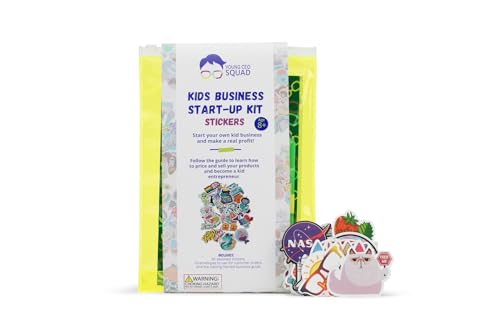
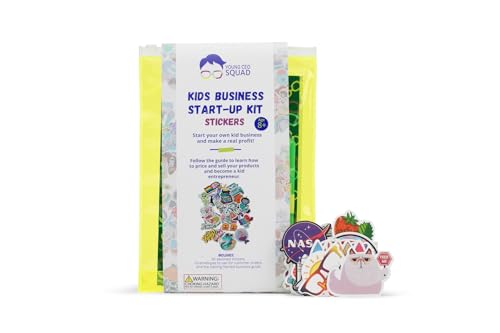
Everything a child needs to launch a sticker-selling business, including pricing guides and marketing tips
For kids who love creativity and tangible results, a sticker business kit is an ideal first step. This all-in-one package provides 50 waterproof vinyl stickers, envelopes, and a step-by-step guide to pricing, marketing, and sales. It’s designed to give children a complete, ready-to-go business model that teaches real-world skills without overwhelming them.
Why it works for kids:
- Immediate gratification: Kids can start selling the same day and see profits quickly.
- Skill-building: Covers pricing strategies, customer interactions, and basic financial tracking.
- Low risk: Minimal upfront cost with high potential for repeat sales (e.g., at school events, local markets, or to neighbors).
Practical tips for parents:
- Help your child identify high-traffic spots (e.g., near a park, at a community fair) to maximize sales.
- Encourage them to customize their stickers with themes (e.g., animals, space, or holidays) to stand out.
- Use the included worksheets to track expenses and profits, introducing basic accounting.
Potential challenges:
- Limited scalability: Sticker sales may plateau unless the child expands their product line.
- Weather dependency: Outdoor sales can be affected by rain or extreme heat.
In practice, many parents find that kids as young as 7 can run this business with minimal supervision, while older children (10+) can handle it independently.
2. "Common Sense Business for Kids" – Building a Foundation
 A kid-friendly guide to understanding business fundamentals, from budgeting to customer service
Not all business tools are physical products. "Common Sense Business for Kids" is a theoretical yet practical book that breaks down complex concepts like supply and demand, marketing, and profit margins into easy-to-understand lessons. It’s perfect for children who enjoy learning through reading and discussion.
Key lessons covered:
- How to identify business opportunities in everyday life.
- The basics of budgeting, pricing, and cost management.
- Customer service skills, including handling complaints and building loyalty.
- Ethical business practices, such as honesty in advertising and fair pricing.
Why it stands out:
- Versatile application: The principles apply to any business idea, from lemonade stands to online ventures.
- Encourages critical thinking: Kids learn to ask, "What problem can I solve?" rather than just "What can I sell?"
- Parent-friendly: Includes discussion questions and activities to reinforce learning.
Best for:
- Kids aged 8–12 who enjoy structured learning.
- Parents who want to lay a strong theoretical foundation before diving into hands-on projects.
For families interested in combining business with technology, AI learning adventures can be a great next step.
3. "Investing for Kids" – Growing Money Over Time
 A guide to saving, investing, and understanding how money grows over time
While earning money is exciting, managing and growing it is where true financial literacy begins. "Investing for Kids" introduces concepts like compound interest, stocks, and savings strategies in a way that’s engaging for young readers. It shifts the focus from short-term earnings to long-term wealth building, a crucial mindset for future success.
What kids will learn:
- The power of saving and how small amounts can grow over time.
- Basic investment vehicles, such as savings accounts, bonds, and stocks (explained simply).
- Goal-setting: How to save for big purchases (e.g., a bike, a gaming console) or future needs (e.g., college).
- Risk and reward: Understanding that higher returns often come with higher risk.
Why it’s valuable:
- Future-proofing: Teaches habits that lead to financial independence in adulthood.
- Real-world relevance: Connects to everyday life (e.g., comparing interest rates on savings accounts).
- Encourages patience: Helps kids see the value of delayed gratification.
Parent tip:
- Open a custodial savings account or use a mock investment simulator (like those offered by some banks) to let your child practice investing with real (or pretend) money.
For more on financial tools for kids, explore allowance card systems that teach responsibility alongside earning.
4. Play Date Cards – Networking for Future Opportunities
 Kid-sized "business cards" for exchanging contact information safely
Entrepreneurship isn’t just about selling—it’s also about building connections. These "Let’s Play" cards help kids exchange contact information with new friends, teaching them the art of networking in a fun, age-appropriate way. While not a direct business tool, they lay the groundwork for future collaborations, whether it’s teaming up for a group project or co-hosting a neighborhood event.
How to use them for business:
- Lemonade stand partnerships: Kids can team up with friends to run a stand together, splitting roles (e.g., one handles sales, another makes the lemonade).
- Craft fairs: If your child sells handmade items, they can hand out cards to interested customers for future orders.
- Service-based businesses: For ventures like dog walking or tutoring, cards make it easy for clients to save their contact info.
Safety first:
- Always supervise how and where kids share their cards.
- Teach them to only give cards to trusted individuals (e.g., friends’ parents, not strangers).
For more on keeping kids engaged in social settings, check out activities for kids at restaurants.
5. Reward Punch Cards – Loyalty Programs for Kid Businesses
 A pack of 200 customizable punch cards to incentivize repeat customers
One of the secrets to a successful business is customer retention. These reward punch cards let young entrepreneurs create loyalty programs for their ventures, whether it’s a lemonade stand, a bake sale, or a chore-based service. For example:
- "Buy 5 lemonades, get the 6th free!"
- "10 car washes = a free water balloon fight!"
Why they’re effective:
- Encourages repeat business: Customers (or parents) are more likely to return if there’s a reward.
- Teaches marketing: Kids learn how to promote their loyalty program to attract more buyers.
- Goal-setting: Tracking punches helps children see progress toward a target.
Creative uses beyond sales:
- Chore charts: Use the cards to track completed chores, with a reward (e.g., extra screen time) after a set number.
- Reading challenges: Punch a card for every book read, leading to a small prize.
For more on motivating kids, sensory support tools can also help with focus and engagement.
How to Choose the Right Business for Your Child
Not every business idea will suit every child. Here’s how to match their interests, skills, and age to the right venture:
| Child’s Interest | Best Business Ideas | Tools to Get Started |
|---|---|---|
| Creative/Artsy | Handmade crafts, custom stickers, painted rocks | Sticker kit, art supplies, Etsy (with parental help) |
| Outdoor/Active | Lemonade stand, car washing, dog walking | Play date cards, punch cards, flyers |
| Tech-Savvy | YouTube channel, simple app/game design | AI learning tools, basic coding kits |
| Social/Organized | Party planning, playdate coordinator | Play date cards, reward punch cards |
| Bookworm/Analytical | Tutoring, book reselling, blogging | "Investing for Kids" book, notebook for tracking sales |
Age-appropriate guidelines:
- Ages 5–7: Simple, supervised ventures (lemonade stand, selling drawings to family).
- Ages 8–10: More independence (craft sales, pet-sitting with parental oversight).
- Ages 11–13: Complex projects (online store with parental help, tutoring younger kids).
- Ages 14+: Near-full autonomy (e.g., managing a small e-commerce store, offering tech support).
Step-by-Step Guide: Launching a Kid’s Business
1. Brainstorm Ideas Together
- Ask: "What do you enjoy doing? What problems do you see that you could solve?"
- Example: If your child loves animals, a dog-walking service could be a great fit.
2. Start Small and Test
- Pilot the idea with a low-cost version (e.g., sell to family first, then neighbors).
- Use the "Common Sense Business for Kids" book to validate the idea’s feasibility.
3. Set Up the Basics
- Name the business (e.g., "Emma’s Sparkle Stickers").
- Create a simple logo (can be hand-drawn).
- Price the product/service (teach them to calculate costs + desired profit).
4. Market the Business
- Flyers: Hand-drawn or printed, posted in the neighborhood.
- Social media: With parental help, older kids can use platforms like Instagram (for ages 13+).
- Word of mouth: Encourage them to tell friends, teachers, and family.
5. Track Finances
- Use a notebook or spreadsheet to record:
- Startup costs (e.g., $10 for sticker materials).
- Sales (e.g., 20 stickers sold at $2 each = $40 revenue).
- Profit (Revenue – Costs = $30).
- Introduce saving vs. spending (e.g., "Let’s save 50% of profits for your next business idea").
6. Evaluate and Improve
- After the first week, ask:
- What worked well?
- What was challenging?
- How can we make it better?
- Example: If lemonade sales are slow, try adding cookies or changing the location.
Common Mistakes (and How to Avoid Them)
Even the best-laid plans can hit snags. Here are real-world pitfalls and solutions:
| Mistake | Why It Happens | How to Fix It |
|---|---|---|
| Overcomplicating the idea | Kids (or parents) try to do too much at once. | Start with one simple product/service. |
| Ignoring costs | Forgetting to track expenses (e.g., lemonade ingredients). | Use a profit calculator (Revenue – Costs = Profit). |
| Poor location choice | Setting up a lemonade stand in a low-traffic area. | Scout high-footfall spots (e.g., near a park, during a community event). |
| Inconsistent branding | Using different names/logos for the same business. | Pick one name and logo and stick with it. |
| Not handling money safely | Keeping cash in an unsecured box. | Use a lockable cash box or have a parent hold the money. |
| Giving up too soon | Expecting instant success. | Remind them that every sale is a learning experience. |
A common mistake is assuming a business will succeed without marketing. Even the best product needs visibility—teach your child to tell everyone about their venture!
FAQ: Kids and Business
Q: How young can a child start a business?
A: Kids as young as 5 or 6 can start with simple, supervised ventures like a lemonade stand or selling drawings. The key is to keep it fun and low-pressure. By age 8–10, many children can handle more responsibility, such as managing a small craft sale.
Q: What are the easiest businesses for kids to start?
A: The simplest ideas require minimal upfront costs and low risk:
- Service-based: Dog walking, pet-sitting, yard work (raking leaves, pulling weeds).
- Product-based: Lemonade stand, handmade bracelets, baked goods (with parental help).
- Digital: Selling old toys/books online (with supervision), starting a YouTube channel (ages 13+).
Q: How can I help my child stay motivated?
A: Celebrate small wins (e.g., their first sale, a positive customer review). Use reward punch cards to track progress toward a goal (e.g., "10 sales = a trip to the ice cream shop"). Most importantly, let them take the lead—your role is to guide, not take over.
Q: Do kids need a business license?
A: For casual, small-scale ventures (e.g., a one-time lemonade stand), no license is typically required. However, if the business grows (e.g., regular sales at a farmers’ market), check local regulations. Some areas require permits for food sales or commercial activities.
Q: How should kids handle competition?
A: Teach them that competition is normal and healthy. Encourage them to:
- Differentiate their product (e.g., offer unique flavors at a lemonade stand).
- Focus on their strengths (e.g., "My stickers are waterproof and last longer!").
- Learn from others (e.g., observe what’s working for a rival stand and adapt).
Q: What if my child’s business fails?
A: Failure is a lesson, not a defeat. Ask them:
- What did you learn?
- What would you do differently next time?
- Do you want to try again with a new approach? Remind them that even successful entrepreneurs (like Steve Jobs or Sara Blakely) faced setbacks early on.
Conclusion
Starting a business teaches kids far more than how to make money—it builds confidence, resilience, and a mindset that sees opportunities everywhere. Whether your child dives into a sticker-selling venture, learns the ropes with a business book, or practices networking with play date cards, the skills they gain will serve them for life.
Your next step: Pick one idea from this guide and help your child take the first step this weekend. Whether it’s brainstorming a business name, designing their first product, or setting up a simple stand, the key is to start small and celebrate every milestone.
The world needs more problem-solvers and innovators—why not start with your child?