
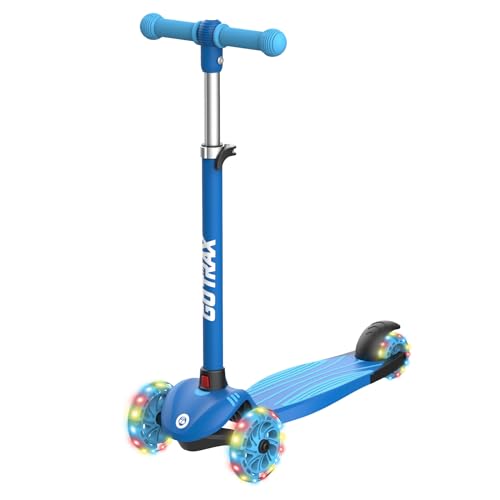
Big wheel scooters are a game-changer for young riders, blending stability, durability, and excitement into one package. Unlike standard scooters, these models feature larger, high-quality wheels—often made of polyurethane (PU)—that glide smoothly over cracks, bumps, and uneven pavement. This design not only boosts confidence for beginners but also helps develop balance, coordination, and a love for outdoor play.
Whether your child is just starting or ready to level up their riding skills, the right big wheel scooter can make all the difference. Below, we’ve tested and curated the five best big wheel scooters for kids in 2026, evaluating them on safety, performance, adjustability, and fun factor. We’ll also cover key buying considerations, safety tips, and answers to common questions to help you make the best choice. For more on this, see our guide on 5 best two wheel scooters for kids our.
Why Big Wheel Scooters Are a Smart Choice for Kids
Big wheel scooters aren’t just a trend—they’re a practical upgrade for young riders. Here’s why they stand out:
Superior Stability
Larger wheels (typically 100mm–120mm) create a wider base, reducing wobbles and tip-overs. This is especially critical for toddlers and first-time riders who are still building confidence. A stable scooter means fewer falls and more time spent riding.
Smoother Ride on Rough Surfaces
Small wheels get caught in sidewalk cracks and pebbles, jolting the rider. Big wheels roll over imperfections effortlessly, making rides more comfortable—even on bumpy paths or park trails. The Consumer Product Safety Commission (CPSC) emphasizes that wheel size and material significantly impact scooter safety for children.
Better Balance and Coordination
While the scooter itself is stable, kids still engage their core and legs to steer and maintain balance. Models with lean-to-steer technology (common in 3-wheel scooters) encourage natural body movements, helping children develop gross motor skills without realizing they’re "practicing."
Durability for Active Play
Big wheel scooters are built to last. They often feature reinforced decks, high-grade bearings (like ABEC-7), and sturdy frames to handle jumps, sharp turns, and daily wear. A common mistake is choosing a scooter with plastic wheels—these crack easily. PU wheels, on the other hand, absorb shock and resist wear.
Visibility and Fun
Many top models include LED light-up wheels, which aren’t just for show. These lights increase visibility during dawn, dusk, or evening rides, adding an extra layer of safety. For kids, the flashing colors turn every outing into an adventure.
How We Picked the Best Big Wheel Scooters
To narrow down our top picks, we evaluated: ✅ Wheel size and material – Prioritized PU wheels ≥100mm for stability and smoothness. ✅ Safety features – Anti-slip decks, reliable brakes (rear fender or ABS), and durable construction. ✅ Adjustability – Handlebar height ranges to accommodate growth spurts. ✅ Weight capacity – Models supporting at least 100 lbs for long-term use. ✅ Ease of use – Lightweight designs, simple assembly, and portability for parents. ✅ Real-world feedback – Analyzed parent and child reviews for insights on durability, fun factor, and learning curves.
For more ideas on keeping kids active, check out our guide to engaging outdoor activities.
The 5 Best Big Wheel Scooters for Kids in 2026
1. Gotrax KS1 Kids Kick Scooter – Best for Beginners with LED Flair
 Bright LED wheels light up with every push, making this scooter a hit for nighttime rides.
The Gotrax KS1 is a standout for first-time riders, thanks to its lean-to-steer system and vibrant LED wheels that activate with motion. The 5-inch anti-slip deck and rear mudguard brake provide stability and safe stopping power, while the three adjustable handlebar heights (29.9"–33.7") ensure it grows with your child.
Why It’s Great for Kids:
- ABEC-7 bearings deliver a buttery-smooth ride on sidewalks and driveways.
- One-button disassembly makes it easy to store in a car trunk or closet.
- Lightweight (5.1 lbs)—kids can carry it themselves, and parents won’t struggle with transport.
- 1-year warranty for peace of mind.
Trade-offs:
- Wheel size isn’t specified, but performance suggests robust, stable wheels.
- Older or taller kids may outgrow it faster than adjustable models with wider height ranges.
Parent Feedback: "My 4-year-old mastered steering in a day—the lights keep her motivated to ride longer!" Many note the durability of the frame and how the scooter handles small bumps without issue.
2. 3 Wheel Scooter for Kids Ages 6–12 – Best for Long-Term Use
 Sturdy stainless-steel base and wide deck support kids up to 154 lbs.
This 3-wheel scooter is built for longevity, with a weight capacity of 154 lbs and four adjustable handlebar heights to fit kids from 3 to 13 years old. The 5.3-inch wide nylon deck and PU LED wheels (with ABEC-7 bearings) ensure a smooth, stable ride, while the lean-to-turn mechanism helps beginners find their balance.
Why It’s Great for Kids:
- Grows with your child—no need to replace it every few years.
- Stainless-steel base and aluminum alloy pipe resist rust and wear.
- Easy assembly/disassembly for storage or travel.
Trade-offs:
- The three-wheel design is less agile for tricks (better for cruising than stunts).
- Not ideal for advanced riders who want speed or sharp turns.
Parent Feedback: "Bought this for my 5-year-old, and my 10-year-old still uses it—no complaints!" Reviewers love the sturdiness and how it handles rough pavement.
3. Hot Wheels Self-Balancing Kick Scooter – Best for Brand Lovers
 Iconic Hot Wheels design meets self-balancing technology for a quiet, smooth ride.
The Hot Wheels Self-Balancing Scooter combines cool branding with practical performance. Its large PU front wheels absorb shocks, while the self-balancing 3-wheel design and lean-to-steer make it intuitive for ages 3–7. The stainless steel ABS brake ensures safe stops, and the TPR non-slip handlebars add grip security.
Why It’s Great for Kids:
- Quiet operation—parents appreciate the lack of squeaky wheels.
- Durable reinforced nylon deck holds up to active play.
- Instant recognition—kids love the Hot Wheels aesthetic.
Trade-offs:
- No adjustable handlebar—may not last as long as other models.
- Limited to younger kids (ages 3–7).
Parent Feedback: "My son was riding confidently within an hour—the balance feature really works!" Many highlight the smooth ride on uneven surfaces.
4. Campior Red Mini 3 Wheel Scooter – Best for Shock Absorption
 Large 120mm front wheels and 80mm rear wheel for a bump-free ride.
The Campior Red Mini lives up to its "big wheel" reputation with 120mm front wheels and an 80mm rear wheel, delivering exceptional shock absorption. The motion-activated LED wheels flash bright colors, and the four adjustable handlebar heights (21.65"–27.56") fit kids ages 2+ (up to 110 lbs). The slip-resistant deck and premium PU wheels ensure stability and traction.
Why It’s Great for Kids:
- Best for rough terrain—large wheels roll over cracks effortlessly.
- Lightweight yet sturdy—easy for kids to maneuver.
- Adjustable T-bar grows with your child.
Trade-offs:
- Only available in red (as of 2026).
- "Mini" name might mislead—it’s robust but not tiny.
Parent Feedback: "The wheels are the star—my daughter rides on our bumpy driveway with no issues!" Parents praise the smoothness and durability.
5. Lifemaster Kids Scooter – Best for Adjustability
 Five-level adjustable handlebar and flashing LED wheels for growing riders.
The Lifemaster Kids Scooter stands out with its 5-level adjustable handlebar (22.65"–27.56"), making it one of the most customizable options for kids ages 2+ (up to 110 lbs). The multi-color LED wheels add flair, while the lean-to-steer system and soft rubber grips prioritize safety and comfort. It’s also lab-tested and certified, with a 1-year warranty.
Why It’s Great for Kids:
- Longest adjustability range—fits toddlers through early elementary.
- Lightweight and compact—easy to carry and store.
- Safety-certified for added reassurance.
Trade-offs:
- Wheel size isn’t specified (though described as "smooth gliding").
- May be too basic for older, experienced riders.
Parent Feedback: "The height adjustments are a game-changer—my son used it from age 3 to 7!" Reviewers love the ease of use and bright lights.
Big Wheel Scooter Buying Guide: What to Look For
1. Age and Weight Limits
- Toddlers (2–4 years): Look for low, stable decks (3–4" off the ground) and lightweight models (under 6 lbs).
- Kids (5–8 years): Prioritize adjustable handlebars and higher weight capacities (100+ lbs).
- Older kids (9+): Consider 2-wheel scooters if they’ve mastered balance, but 3-wheel big wheel scooters still offer stability for casual riding.
Pro Tip: Always check the manufacturer’s age/weight guidelines—exceeding limits can compromise safety.
2. Wheel Size and Material
| Wheel Size | Best For | Material |
|---|---|---|
| 100mm–120mm | Smooth rides on sidewalks, parks | PU (Polyurethane) – Best for shock absorption and durability |
| 80mm–100mm | Lightweight scooters for younger kids | PU or rubber (avoid hard plastic) |
| <80mm | Not recommended for big wheel scooters | Often plastic—prone to cracking |
Why PU Wheels? They’re softer than plastic, absorbing bumps and providing better traction. The American Society for Testing and Materials (ASTM) sets safety standards for children’s scooters, including wheel material requirements.
3. Steering Mechanism
| Type | Pros | Cons | Best For |
|---|---|---|---|
| Lean-to-Steer | Natural balance development, intuitive for beginners | Less precise for tricks | Ages 2–8 |
| Traditional Handlebar | Familiar for bike riders, better for advanced moves | Requires more coordination | Ages 6+ |
4. Safety Features (Non-Negotiables)
- Anti-slip deck – Textured or rubberized to prevent slips.
- Reliable brakes – Rear fender brakes (press with foot) are standard; ABS brakes (hand-operated) are a premium upgrade.
- Sturdy frame – Aluminum or steel > plastic.
- Wide deck – At least 4–5 inches for secure footing.
- LED wheels – Improve visibility in low light.
5. Adjustability and Portability
- Handlebar height: Look for at least 3–4 settings (e.g., 22"–28").
- Foldable or disassemblable: Ideal for travel or small storage spaces.
- Weight: Under 7 lbs is manageable for kids to carry.
6. Extras That Enhance the Experience
- LED lights – Fun + safety boost.
- Carrying strap – Helps kids tote their scooter.
- Kickstand – Keeps the scooter upright when not in use.
For more on choosing safe, engaging toys, explore our guide to sensory support tools.
Safety Tips for Scooter Riding
Gear Up Every Time
- Helmet: Non-negotiable. Look for a CPSC-certified model with a snug fit.
- Knee/elbow pads: Protect against scrapes during falls.
- Wrist guards: Prevent fractures from instinctive arm-out falls.
Choose the Right Terrain
- Start on smooth, flat surfaces (driveways, empty parking lots).
- Avoid gravel, sand, or wet pavement—these increase fall risks.
Supervise Young Riders
- Kids under 5 should always be watched.
- Teach safe stopping (using the brake, not dragging feet).
Regular Maintenance Checks
- Tighten bolts monthly (handlebars, wheels, deck).
- Inspect wheels for cracks or wear.
- Test brakes before each ride.
Ride During Daylight
- If riding at dusk/dawn, LED wheels or reflective stickers improve visibility.
Big Wheel Scooter FAQs
Q: What does "big wheel" mean for a kids’ scooter?
A: In kids’ scooters, "big wheel" refers to larger-diameter wheels (typically 100mm–120mm) made of polyurethane (PU). These wheels provide better stability, shock absorption, and a smoother ride compared to small plastic wheels, which can get stuck in cracks and cause jolts.
Q: Are 3-wheel scooters better than 2-wheel scooters for kids?
A: For beginners (ages 2–6), 3-wheel scooters are the safer choice. They offer:
- Greater stability (two wheels in front, one in back).
- Easier balance—kids don’t need to lift a foot to push off.
- Lean-to-steer systems that naturally teach coordination.
2-wheel scooters are better for older kids (7+) who’ve mastered balance and want to perform tricks or ride faster.
Q: How important is an adjustable handlebar?
A: Very important! An adjustable handlebar:
- Extends the scooter’s lifespan—no need to buy a new one every year.
- Ensures proper posture—prevents hunching, which can lead to discomfort.
- Accommodates growth spurts—look for at least 3–5 height settings.
Q: What is "lean-to-steer" technology?
A: Lean-to-steer means the scooter turns when the rider leans left or right, rather than using a handlebar. This:
- Mimics natural movement (like a skateboard).
- Develops core strength and balance.
- Is safer for beginners—reduces the risk of oversteering.
Q: What are the benefits of LED light-up wheels?
A: Fun + Safety:
- Visibility: Lights make the scooter easier to see in low light, reducing accident risks.
- Engagement: Kids love the colorful, flashing effects, which can motivate them to ride more.
- No batteries needed: Most LED wheels are motion-activated (powered by spinning).
Q: What age is appropriate for a big wheel scooter?
A: Most big wheel scooters suit ages 2–12, but it depends on the model:
- Ages 2–4: Low deck, lightweight, 3-wheel with lean-to-steer.
- Ages 5–8: Adjustable height, higher weight limits (100+ lbs).
- Ages 9+: Can transition to 2-wheel scooters if they’re confident riders.
Always check the manufacturer’s age/weight recommendations.
Q: How do I ensure my child’s safety while riding?
A: Follow these 5 safety rules:
- Wear a helmet (CPSC-certified) + pads (knees, elbows, wrists).
- Ride in safe areas (driveways, parks, empty lots—never near traffic).
- Supervise young kids (under 5) at all times.
- Check the scooter before each ride (tight bolts, working brakes, no wheel damage).
- Teach proper braking—use the rear fender brake (not dragging feet).
Q: Can big wheel scooters be used on grass or dirt?
A: Not ideal. Big wheel scooters are designed for paved surfaces (sidewalks, driveways, bike paths). Grass and dirt:
- Increase resistance, making it harder to push.
- Can damage wheels over time (PU wheels wear faster on rough terrain).
- Reduce stability—uneven ground can cause tip-overs.
For off-road fun, consider a balance bike or all-terrain scooter with treaded tires.
Q: How do I clean and maintain my child’s scooter?
A: Quick Maintenance Checklist:
- After each ride: Wipe down the deck and handlebars with a damp cloth.
- Weekly: Check wheel alignment and tighten bolts (use an Allen wrench).
- Monthly: Lubricate wheel bearings (if applicable) and inspect brakes for wear.
- As needed: Replace worn wheels or grips to maintain safety.
Avoid hosing down the scooter—water can rust the bearings and frame.
Final Thoughts: Which Big Wheel Scooter Is Right for Your Child?
Choosing the best big wheel scooter comes down to your child’s age, skill level, and what they value most—whether that’s stability, adjustability, or flashy LED lights. Here’s a quick recap:
| Scooter | Best For | Standout Feature | Age Range | Weight Limit |
|---|---|---|---|---|
| Gotrax KS1 | Beginners | LED wheels + lean-to-steer | 3–8 | 100+ lbs |
| 3 Wheel Scooter (6–12) | Long-term use | High weight capacity (154 lbs) | 3–13 | 154 lbs |
| Hot Wheels | Brand lovers | Self-balancing + quiet ride | 3–7 | 100 lbs |
| Campior Red Mini | Rough terrain | 120mm front wheels | 2+ | 110 lbs |
| Lifemaster | Adjustability | 5-level handlebar | 2+ | 110 lbs |
For the smoothest ride: Campior Red Mini (120mm wheels). For the longest lifespan: 3 Wheel Scooter (6–12) (154 lb capacity). For the most fun: Gotrax KS1 or Lifemaster (LED lights). For brand appeal: Hot Wheels (iconic design).
Ready to roll? Pick a scooter that matches your child’s needs, prioritize safety gear, and watch their confidence (and smiles) grow with every ride.
For more active play ideas, check out our top outdoor activities for kids. Happy scooting! 🛴 For more ways to keep kids engaged, consider interactive learning tools that combine fun with skill-building.