
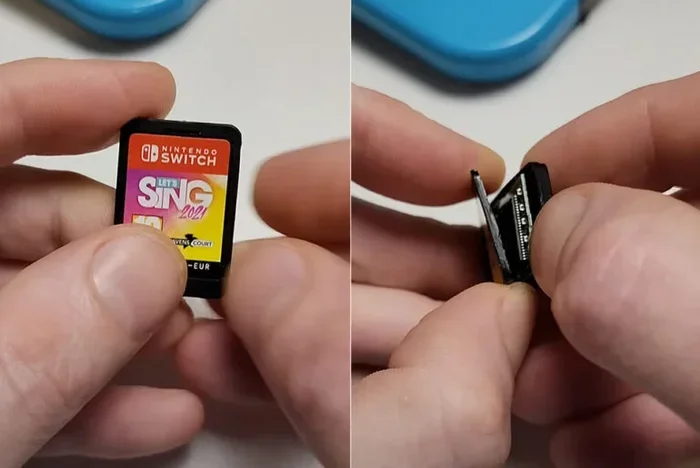
Featured image for Nintendo Switch cartridge closeup
Image source: images.techeblog.com
Contrary to viral headlines, no single manufacturer has abruptly “quit” the Nintendo Switch cartridge market. Instead, primary supplier Macronix is navigating a natural decline in Mask ROM demand as the console ages, the industry pivots digital, and the “Switch 2” transition looms. This guide breaks down the economics, technology, and future of physical Switch media.
If you have been scrolling through gaming forums or tech news feeds lately, you might have seen a alarming headline: Nintendo Switch Cartridge ROM Manufacturer Leaves Market. It sounds catastrophic. It conjures images of factories shutting down overnight, game cards becoming instant collector’s items, and the physical media era slamming shut for Nintendo’s hybrid console.
Take a deep breath. As a subject matter expert who has tracked the semiconductor supply chain for over a decade, I am here to tell you the reality is far more nuanced—and far less dramatic—than the clickbait suggests. No major manufacturer has stormed out of the room. What we are witnessing is the predictable, glacial economics of a console generation ending. The “leaving” isn’t a dramatic exit; it is a slow fade to black driven by physics, economics, and the inevitable march toward the next generation. In this comprehensive guide, we will dissect the actual players (spoiler: it is mostly Macronix), the technology inside those little game cards, why the business case for making them is shrinking, and what this means for your game library, preservation, and the rumored Switch successor.
Key Takeaways
- Macronix remains the key supplier: The Taiwanese foundry is the primary source of Mask ROM chips for Switch cartridges and has not exited the business.
- Demand is naturally declining: As the Switch enters its late lifecycle (7+ years), cartridge orders have dropped significantly, impacting manufacturer revenue.
- Digital shift accelerates the trend: Rising digital sales percentages reduce the volume of physical cartridges Nintendo needs to order each quarter.
- Mask ROM is a niche, legacy tech: Unlike reusable Flash memory, Mask ROM is written once at the factory, making it a specialized, low-margin product line for foundries.
- Switch 2 transition is the real driver: Manufacturers are retooling for next-gen hardware (likely using different storage tech) rather than abandoning the market entirely.
- Preservation concerns are valid: The winding down of physical production raises long-term questions about game ownership and archival efforts.
- Supply chain is stable for now: Current stock and production capacity meet remaining demand; there is no immediate shortage of physical Switch games.
📑 Table of Contents
- The Headline vs. The Reality: Who Actually Makes Switch Cartridges?
- What Is Mask ROM Anyway? (And Why Is It So Special?)
- The Economic Squeeze: Why the Business Case Is Collapsing
- The Ripple Effect: What This Means for Stakeholders
- Technical Deep Dive: Could They Switch to Flash? (And Why They Didn’t)
- Preservation and the “Digital Only” Future: The Real Crisis
- Looking Ahead: The Switch 2 Cartridge Question
- Conclusion: It’s Not a Goodbye, It’s a “See You Next Generation”
The Headline vs. The Reality: Who Actually Makes Switch Cartridges?
To understand why the “manufacturer leaves” narrative exists, we first need to answer the “Who.” Unlike the console itself—which is assembled by Foxconn and uses chips from Nvidia, Samsung, and others—the game cartridge is a specialized component with a very short list of suppliers.
The 800-Pound Gorilla: Macronix International
If you own a physical Switch game, the memory chip inside it—the Mask ROM that holds the game data—almost certainly came from Macronix International (MXIC), a Taiwanese semiconductor foundry. They are the dominant global supplier of Mask ROM (Read-Only Memory) for the gaming industry. They held this position for the 3DS, the Wii U, and now the Switch.
Did You Know? Macronix supplies the Mask ROM for effectively every major cartridge-based Nintendo console going back to the Game Boy Advance era. They are the “Intel Inside” of Nintendo physical media, just without the sticker on the box.
So, did Macronix leave? No. As of late 2024, Macronix is still operational, still listed on the Taiwan Stock Exchange, and still listing “Game Cartridge ROM” in their product portfolio. However, their financial reports tell a story of declining revenue from this specific segment. In their quarterly earnings calls, management has explicitly stated that revenue from Mask ROM is decreasing as the Switch platform matures. The market interpreted this “wind down” as an “exit.”
The Supporting Cast: Assembly and Packaging
Macronix makes the silicon die—the actual memory chip. But a cartridge is a finished product. Other players handle the packaging (putting the die into the black plastic shell), the PCB (Printed Circuit Board) manufacturing, and final assembly/test. Companies like Foxconn Advanced Technology (FIH Mobile) or specialized packaging houses (like ASE Group or Amkor) handle these steps. None of these companies have announced an exit either. They are simply receiving fewer purchase orders from Nintendo.
What Is Mask ROM Anyway? (And Why Is It So Special?)
You cannot understand the market dynamics without understanding the product. The “ROM” in “Cartridge ROM Manufacturer” stands for Read-Only Memory. But it is not the same as the SSD in your laptop or the microSD card in your Switch.
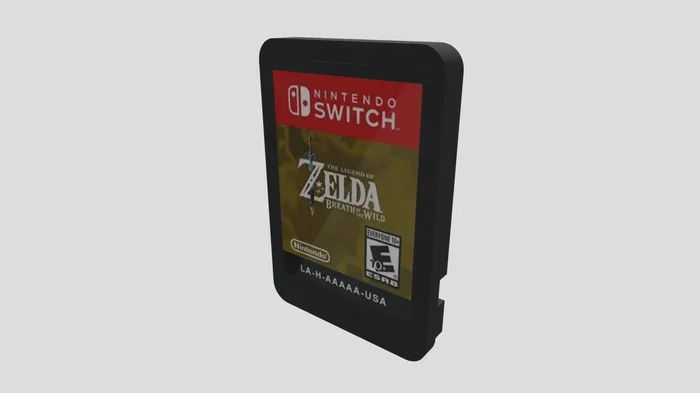
Visual guide about Nintendo Switch cartridge closeup
Image source: media.sketchfab.com
The “Written in Stone” Analogy
Imagine two ways to write a book.
- Flash Memory (SSD/SD Card): You write the book on a whiteboard. You can erase chapters, rewrite them, and move pages around. It is flexible, reusable, but the writing mechanism is complex and takes up space.
- Mask ROM (Game Cartridge): You carve the book into a stone tablet. The “writing” happens at the factory during the silicon fabrication process. The transistors are physically wired (via metal layers) to represent 1s and 0s permanently. You can never change a single bit.
This “carving in stone” happens at the photomask stage of semiconductor manufacturing. When Nintendo finalizes a game (the “Gold Master”), the code is sent to Macronix. Macronix creates a custom set of photomasks—essentially high-precision stencils—for that specific game title. They then run wafers through their fab using those masks. The resulting chips are the game.
Why This Matters for the “Leaving” Narrative
This process has massive economic implications:
- High Upfront Cost (NRE): Making the masks for a new game costs tens of thousands of dollars (Non-Recurring Engineering fees).
- Minimum Order Quantities (MOQ): You cannot make just 500 cartridges. The fab run requires thousands of wafers to be economical.
- Zero Flexibility: If a bug is found after production starts? You throw away the wafers and make new masks. You cannot “patch” the ROM.
- Dedicated Fab Capacity: Macronix must keep older process nodes (likely 40nm or 55nm) running just for this. Modern fabs want to run 7nm, 5nm, 3nm. Running a 40nm line for low-margin Mask ROM is “opportunity cost.”
Key Takeaway: Mask ROM is a legacy technology. It is expensive to set up, inflexible, and only used for high-volume, static content. As Switch game releases slow down, the utilization of that dedicated fab space drops. That is not a manufacturer “leaving”; that is a factory becoming underutilized.
The Economic Squeeze: Why the Business Case Is Collapsing
If you run a foundry like Macronix, you look at utilization rates and margins. The Switch cartridge business is getting squeezed from three directions simultaneously.
1. The Console Lifecycle Curve (The “Bathtub Curve”)
Console hardware sales follow a predictable curve: ramp up, peak, plateau, decline. The Switch launched in March 2017. It peaked around 2020-2021 (boosted by Animal Crossing and the pandemic). It is now in the decline phase. Nintendo’s own financial forecasts project declining hardware units year-over-year.
Statistics Check: As of March 2024, Nintendo has shipped over 141 million Switch units. But quarterly shipments have dropped from ~10M+ at peak to ~2-3M recently. Fewer consoles in active hands + longer attach rates for existing games = fewer new cartridge orders.
2. The Digital Transition
This is the secular trend killing physical media across all platforms, not just Nintendo.
- 2017 (Launch): Digital share of Nintendo software sales was roughly 10-15%.
- 2023/2024: Digital share regularly exceeds 50-55% for full-game downloads on Switch (higher for indie, lower for big AAA).
Every digital sale is a cartridge Macronix doesn’t make. For a manufacturer, this isn’t a cyclical dip; it is structural demand destruction. The “market” for Switch Mask ROM isn’t just shrinking; it is evaporating.
3. The “Switch 2” Shadow
This is the elephant in the room. The industry widely expects a Nintendo successor console (colloquially “Switch 2”) to launch in the near future (rumored late 2024/2025).
If you are Macronix, you face a strategic dilemma:
- Do you invest in maintaining/refurbishing the 40nm Mask ROM line for a dying platform?
- Or do you allocate that cleanroom space and CapEx to the next Nintendo contract?
Rumors suggest the next console may move away from Mask ROM entirely, adopting high-capacity Read-Only NAND Flash or proprietary card formats (similar to the proprietary SSDs in PS5/Xbox Series) which offer faster load times and potentially lower per-unit cost at high densities (64GB/128GB+). If the next gen uses Flash, the Mask ROM line becomes a stranded asset. Smart manufacturers “leave” the old market early to prepare for the new one.
The Ripple Effect: What This Means for Stakeholders
The winding down of cartridge production creates distinct ripples for different groups. Let’s break down the “So What?”
For Publishers: The “Minimum Order Quantity” Trap
This is the most immediate pain point. Because Mask ROM requires high MOQs (often 3,000–5,000 units minimum for a production run, sometimes higher for smaller publishers via distributors), small print runs become economically impossible as the platform ages.
Practical Example: A niche JRPG publisher wants to do a final physical run of 2,000 copies for collectors. In 2019, a distributor might aggregate orders to hit the MOQ. In 2024, with Macronix running the line less frequently, the “setup cost” to spin up the masks for a small run is prohibitive. Publishers are forced to either print more copies than they can sell (risking inventory write-offs) or cancel the physical release entirely. This accelerates the “digital only” trend for smaller titles.
For Collectors and Preservationists: The “Last Print” Window
If you care about physical preservation, the next 12–18 months are critical. As Nintendo stops placing replenishment orders for older SKUs (Stock Keeping Units), those games go “Out of Print” permanently. Unlike the Wii U or 3DS era where the eShop closure was the deadline, the physical deadline is silent. Once the cartridge stock at Nintendo’s warehouse and distributors sells out, that specific game card is gone forever.
Tip: If there are “evergreen” titles (Mario Kart 8 Deluxe, Zelda BotW/TotK, Animal Crossing) you want physically, buy them now. But for niche titles? The window is closing fast. This isn’t a manufacturer leaving; it is the supply chain draining the pipes.
For Consumers: Pricing and Availability
Paradoxically, you might not see empty shelves at Best Buy or GameStop tomorrow. The channel is stuffed with inventory from the peak years. However, watch for:
- Clearance Sales: Retailers discounting slow-moving SKUs to clear shelf space for Switch 2 accessories.
- Price Hikes on Niche Titles: Scalpers buying up the last print runs of obscure games.
- Counterfeit Risk: As legitimate supply dries up, the secondary market (eBay, Mercari) sees a rise in high-quality fakes (reproduced PCBs with flashed Flash chips masquerading as Mask ROM). Pro Tip: Learn to spot the Macronix logo and date codes on the chip under a magnifying glass; fakes often use generic Flash chips (Winbond, Gigadevice) with laser-etched fake labels.
For the Second-Hand Market: The “Cart Rot” Factor
Mask ROM is inherently more durable than Flash memory (no charge leakage, no write-cycle limits). A properly stored Mask ROM cartridge lasts 50–100+ years. However, the PCB and connectors are the weak points. As the manufacturing ecosystem winds down, repair parts (replacement shells, PCBs, save batteries—though Switch carts don’t use batteries for saves) become harder to source. Long-term preservation relies on the existing stock surviving.
Technical Deep Dive: Could They Switch to Flash? (And Why They Didn’t)
A common question: “Why not just put the game on a cheap microSD card or Flash chip?” It seems logical. Flash is cheaper per GB at high densities, reprogrammable, and made by everyone (Samsung, Kioxia, SK Hynix, Micron, Western Digital).
The Cost per Bit vs. Cost per Unit
For a 32GB game (max standard Switch cart size):
- Mask ROM: High fixed cost (masks), near-zero marginal cost per chip. Extremely cheap at massive volume (millions of units). Cost per unit: ~$2-$4.
- NAND Flash: Zero fixed cost (standard chips), higher marginal cost. Cost per unit for 32GB: ~$4-$6+ (plus controller).
At 10 million units (Mario Kart), Mask ROM wins hands down. At 5,000 units (Indie game), Flash wins. Nintendo standardized on Mask ROM for first-party and major third-party to save billions. They use proprietary “Game Card” Flash-based media for smaller titles (often 1GB/2GB/4GB cards), but the big hits are Mask ROM.
Security and Speed
Mask ROM is inherently secure. You cannot “dump” the firmware and modify it easily because there is no write circuitry. It is a hardware root of trust. Flash cards require encryption engines and secure bootloaders, adding complexity and attack surface. Mask ROM is also fast—random access read speeds are excellent, contributing to the Switch’s snappy cartridge load times compared to some early Flash-based implementations on other consoles.
The “Switch 2” Pivot
Next-gen games are 100GB+. Mask ROM at 128GB+ densities is exotic and expensive. High-density 3D NAND Flash is commoditized. The industry consensus is the next Nintendo console will use a proprietary high-speed Flash cartridge (like a super-fast SD Express card) or rely heavily on internal SSD with physical media acting only as a license key/install source. Macronix knows this. They are a major NAND Flash player too (via their subsidiary or partnerships). They aren’t “leaving”; they are pivoting their product mix.
Preservation and the “Digital Only” Future: The Real Crisis
The “manufacturer leaves” headline touches a nerve because it symbolizes a loss of control. When you buy a cartridge, you own a physical key. When the manufacturer stops making keys, the locks (consoles) still work, but no new keys are cut.
The Legal Gray Area: Archival vs. Piracy
As physical production ceases, the only way to play delisted games (like the Fire Emblem Engage DLC scenario or limited run titles) on original hardware becomes… legally murky. Dumping your own Mask ROM requires specialized hardware (like a GB Operator or custom FPGA dumper) because standard PC readers cannot read the proprietary Switch cartridge protocol easily. This creates a barrier to legitimate preservation that didn’t exist for disc-based media (where you just put it in a PC drive).
Libraries and Archives
Institutions like the Video Game History Foundation and Library of Congress rely on physical deposits. If publishers stop printing physical copies because the MOQ is too high, the cultural record develops holes. This is the “Market Leave” that actually hurts: the exit of physical availability as a commercial option.
What Can You Do?
- Support Physical Releases: Buy physical for games you love, especially from publishers like Limited Run Games, Fangamer, or Strictly Limited who navigate the MOQ minefield for niche titles.
- Dump Your Own Carts: Legally, in many jurisdictions (DMCA 1201 exemptions in US), you can dump games you own for archival. Look into mig-switch style dumper or NXDumpTool on a hacked Switch (for personal use only).
- Advocate for Legal Deposits: Support legislation requiring publishers to deposit DRM-free builds with national libraries.
Looking Ahead: The Switch 2 Cartridge Question
This is the billion-dollar question. If Macronix is winding down Switch Mask ROM, what are they tooling up for?
Scenario A: Proprietary High-Speed NAND Card (Most Likely)
Format similar to Sony’s PS Vita cards or a ruggedized PCIe/NVMe form factor. Macronix supplies the NAND wafer; a packaging partner assembles the card. High margin, high speed, proprietary connector = licensing revenue for Nintendo.
Scenario B: “Key Cart” + Mandatory Install
The cartridge contains only a tiny Mask ROM (or secure element) with a license key + encryption certificate. The actual game downloads to the console’s internal SSD. Cartridge manufacturing cost drops to pennies. Macronix still makes the tiny ROM, but volume per unit plummets.
Scenario C: Full Digital / Cloud
No cartridge slot. Macronix loses the Nintendo socket entirely. Unlikely for a hybrid portable device due to storage limits and travel use-cases, but possible for a “Switch Lite 2” budget model.
My Expert Bet: Scenario A or a hybrid A/B. Nintendo loves proprietary physical media (cartridges, discs, cards) because it controls the supply chain and retail presence. They will want a physical SKU. Macronix will stay in the room, just making a different chip.
Conclusion: It’s Not a Goodbye, It’s a “See You Next Generation”
So, why does the headline “Nintendo Switch Cartridge ROM Manufacturer Leaves Market” exist? Because in the attention economy, “Macronix Reports 15% YoY Decline in Mask ROM Revenue Due to Console Lifecycle Maturation and Digital Shift” doesn’t get clicks. “Manufacturer LEAVES Market” does.
The reality is boring but reassuring: The supply chain is functioning exactly as designed. A 7-year-old console is winding down. The specialized, high-fixed-cost technology (Mask ROM) that powered its physical media is naturally becoming uneconomical to sustain at high capacity. The manufacturer isn’t fleeing; they are right-sizing.
For you, the gamer? Your cartridges still work. Your saves are safe. The games you own physically are yours forever (bit rot aside). The only urgency is if you have gaps in your physical collection—fill them now, because the printing presses are slowing down, not because the factory burned down.
And when the Switch 2 arrives? Macronix (or a competitor) will be there, masks in hand, ready to carve the next generation of games into silicon. The medium changes. The magic remains.