
Introducing children to the Bible can be one of the most rewarding experiences for parents, teachers, and caregivers. The right resources transform scripture from abstract stories into vivid, memorable lessons that shape young hearts and minds. Whether you're looking for interactive games, visually engaging Bibles, or daily devotionals, this guide covers the best tools to make faith formation fun, accessible, and impactful for kids of all ages.
Below, you’ll find a curated selection of 10 top Bible passages and resources—each designed to spark curiosity, deepen understanding, and strengthen a child’s connection to God’s Word. We’ve also included practical tips for teaching, age-appropriate recommendations, and answers to common questions to help you navigate this spiritual journey with confidence.
Why Teaching the Bible to Kids Matters
Building a moral and spiritual foundation early helps children develop resilience, empathy, and a sense of purpose. The Bible offers: ✅ Timeless wisdom – Stories of courage (David and Goliath), faith (Noah’s Ark), and love (The Good Samaritan) teach values that last a lifetime. ✅ Emotional intelligence – Lessons on forgiveness, kindness, and perseverance help kids navigate challenges. ✅ Cultural literacy – Many historical, literary, and artistic references stem from biblical narratives. ✅ Family bonding – Shared Bible study strengthens relationships through meaningful discussions.
In practice, parents and educators find that interactive, multi-sensory approaches (games, audio, visuals) work best. A common mistake is relying solely on passive reading—kids engage more when they do something with the lesson, whether it’s acting out a story, answering trivia, or creating art inspired by scripture.
Top 10 Bible Passages for Kids (With Teaching Tips)
These passages are age-appropriate, engaging, and packed with life lessons. Each includes a key takeaway and a fun activity to reinforce the message.
| Passage | Key Lesson | Best For Ages | Activity Idea |
|---|---|---|---|
| Genesis 1-2 (Creation) | God’s creativity and love for His world | 3-6 | Draw or craft the 7 days of creation |
| Genesis 6-9 (Noah’s Ark) | Obedience and trust in God | 4-8 | Build an ark from recycled materials |
| 1 Samuel 17 (David & Goliath) | Courage and faith over fear | 6-10 | Role-play the story with costumes |
| Daniel 6 (Lion’s Den) | Trusting God in hard times | 5-9 | Create a "den" with pillows and discuss bravery |
| Luke 2 (Jesus’ Birth) | God’s gift of love | 3-7 | Nativity scene craft or carol singing |
| Matthew 14 (Feeding 5,000) | Generosity and God’s provision | 6-12 | Share a snack while discussing the story |
| Luke 15 (The Lost Sheep) | God’s unconditional love | 4-8 | Play hide-and-seek with a "sheep" stuffed animal |
| John 3:16 | God’s love and salvation | 7-12 | Memorize with hand motions or a song |
| Ephesians 4:32 (Be Kind) | Kindness and forgiveness | 5-10 | Write thank-you notes to family/friends |
| Joshua 1:9 (Be Strong & Courageous) | Facing fears with faith | 8-12 | Discuss personal fears and pray together |
For deeper study, pair these passages with the resources below to make learning interactive and memorable.
10 Best Bible Resources for Kids in 2026
🎲 Interactive Games for Hands-On Learning
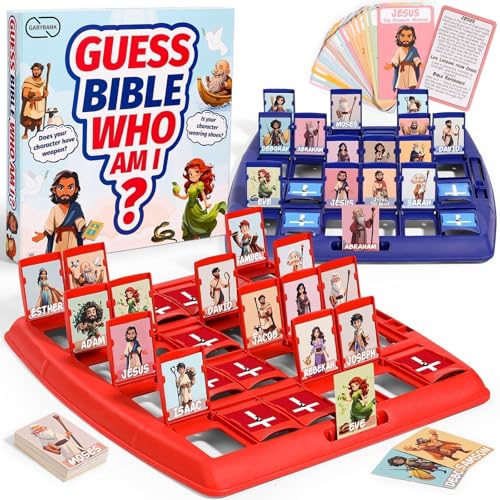
1. Garybank Guess Bible Who I Am Board Game
 Kids take turns guessing Bible characters with story cards that teach courage, kindness, and obedience.
This "Who Am I?"-style game turns scripture into a fun mystery for the whole family. With 24 Bible characters (from Moses to Esther), kids develop critical thinking while learning key stories. The included life story cards provide context, making it perfect for Sunday school, family game night, or youth groups.
✅ Best for: Ages 6+ (younger kids may need help) ✅ Why it works: Combines memory, deduction, and storytelling—far more engaging than passive reading. ✅ Pro tip: Use it as a warm-up activity before a Bible lesson to get kids excited.
Explore more engaging activities to pair with game-based learning.
2. Garybank Faith Darts Bible Trivia Game
 Safe, sticky-ball darts meet Bible trivia in a high-energy game for all ages.
This unique blend of physical and mental challenge features four trivia categories:
- Biblical Riddles (e.g., "I built an ark—who am I?")
- Bible Trivia (e.g., "How many fish did Jesus multiply?")
- Guess the Gibberish (decipher scrambled Bible phrases)
- Bible Talking (discussion prompts like "What does ‘love your neighbor’ mean?")
✅ Best for: Active kids who learn by moving ✅ Why it works: Encourages teamwork, recall, and discussion—not just memorization. ✅ Pro tip: Play in teams (kids vs. adults) to make it even more fun.
3. Garybank Faith Tower Bible Game
 Stack blocks with printed Bible verses while answering trivia—great for fine motor skills and scripture memory.
A Jenga-style game with a faith twist, each block features a different Bible verse. As kids pull blocks, they answer trivia questions or discuss the verse’s meaning. It’s a great way to reinforce memory while keeping hands busy.
✅ Best for: Ages 5-12 (adjust difficulty based on age) ✅ Why it works: Tactile learners retain verses better when they see and touch them. ✅ Pro tip: Write new verses on blank blocks to customize the game.
4. Bible Stories Memory Game (Old Testament)
 Match Bible characters with their stories—Noah, Moses, David, and more.
This 24-card set (12 characters + 12 stories) helps kids connect faces to narratives while improving memory and concentration. The glossy, durable cards are perfect for travel, waiting rooms, or quiet time.
✅ Best for: Ages 3-8 ✅ Why it works: Visual learners thrive with this format. ✅ Pro tip: Use it as a bedtime story prompt—pick a card and read the full story together.
📖 Best Bibles & Books for Kids
5. NIV Kids’ Visual Study Bible
 Full NIV text with kid-friendly notes, maps, and vibrant visuals to bring scripture to life.
This award-winning Bible is perfect for kids transitioning from storybook Bibles to full scripture. Features include:
- Full-color illustrations of key events
- Study notes explaining tough concepts
- Character profiles (e.g., "Meet Moses: The Reluctant Leader")
- Maps and timelines for historical context
✅ Best for: Ages 8-12 (or advanced younger readers) ✅ Why it works: Bridges the gap between simple stories and deep study. ✅ Pro tip: Use the maps to trace Paul’s missionary journeys or the Exodus route.
For more educational tools, check out a reliable machine for capturing faith-based projects and memories.
6. The Bible Made Easy – for Kids
 A child-friendly breakdown of the Bible’s big story—from Genesis to Revelation.
This book simplifies the Bible’s narrative arc into easy-to-understand sections, making it ideal for kids who:
- Are too old for storybook Bibles but not ready for full text
- Need a clear, chronological overview
- Struggle with how all the stories connect
✅ Best for: Ages 7-10 ✅ Why it works: Helps kids see the "big picture" of God’s plan. ✅ Pro tip: Read one section per week and pair it with a related craft or discussion.
7. Our Daily Bread for Kids: 365 Meaningful Moments with God
 Short, engaging devotions with a Bible verse, story, and prayer for every day of the year.
This daily devotional makes spiritual habits stick by:
- Connecting Bible truths to real life (e.g., "How can you show kindness today like the Good Samaritan?")
- Including discussion questions for family or personal reflection
- Keeping entries short (5-10 minutes max)
✅ Best for: Ages 6-12 ✅ Why it works: Consistency builds faith—even a few minutes daily makes a difference. ✅ Pro tip: Use it at breakfast or bedtime to start/end the day with God.
🎨 Creative & Visual Resources
8. Decorably 15 Bible Posters for Kids Classroom
 15 laminated 11×14" posters featuring key Bible stories, prayers, and virtues like the Fruits of the Spirit.
These vibrant, durable posters are perfect for:
- Sunday school classrooms
- Homeschooling spaces
- Kids’ bedrooms (as a daily reminder)
Each poster covers a different theme, such as:
- The Ten Commandments
- The Lord’s Prayer
- Noah’s Ark
- The Armor of God (Ephesians 6:10-18)
✅ Best for: Ages 3-10 ✅ Why it works: Passive learning—kids absorb lessons just by seeing them daily. ✅ Pro tip: Rotate posters monthly to keep the content fresh.
9. Fun Express Mini Bible Booklets (12-Pack)
 Compact booklets with key verses on love, forgiveness, and grace—perfect for on-the-go inspiration.
These wallet-sized booklets are great for:
- Sunday school prizes
- Birthday party favors
- Backpack or purse carry-alongs
Each booklet includes short, powerful verses categorized by theme, making them easy to reference in daily life.
✅ Best for: All ages (even adults love them!) ✅ Why it works: Portability means faith is always within reach. ✅ Pro tip: Gift one with a note like, "Here’s a little reminder of God’s love for you!"
🔊 Audio & Tech Resources
10. Daily Meditation ESV Children’s Bible Player
 Screen-free audio device with 380 ESV Bible passages and songs—10-hour battery life.
This durable, kid-friendly player is ideal for:
- Car rides (no screens = no motion sickness!)
- Bedtime listening
- Independent quiet time
Features:
- Dramatized audio (engaging voices and sound effects)
- Memory function (picks up where they left off)
- Rechargeable battery
✅ Best for: Ages 3-8 (or non-readers) ✅ Why it works: Auditory learners retain stories better through listening. ✅ Pro tip: Pair with the physical Bible—let them follow along in a picture Bible.
For more tech-savvy learning, explore AI learning adventures that can complement faith-based education.
How to Choose the Right Bible Resource for Your Child
Not all resources work for every child. Consider these factors:
| Child’s Learning Style | Best Resource Types | Avoid |
|---|---|---|
| Visual | Illustrated Bibles, posters, memory games | Audio-only resources |
| Auditory | Audio Bibles, devotionals with read-aloud stories | Text-heavy books |
| Kinesthetic (Hands-On) | Games (darts, tower, trivia), crafts | Long reading sessions |
| Social | Group games, discussion-based devotionals | Solo activities |
| Independent | Personal devotionals, audio players | Team-based games |
Age Guidelines:
- Toddlers (2-4): Board books, audio Bibles, simple posters
- Early Elementary (5-7): Story Bibles, memory games, short devotionals
- Late Elementary (8-10): Study Bibles, trivia games, chapter books
- Pre-Teens (11-12): Full-text Bibles, in-depth devotionals, discussion guides
Practical Tips for Teaching the Bible to Kids
🎯 Make It Fun (Not a Chore)
- Use props (e.g., a toy ark for Noah’s story, a slingshot for David & Goliath).
- Act it out – Kids remember 90% of what they do vs. 10% of what they read.
- Incorporate music – Songs like "Father Abraham" or "The B-I-B-L-E" reinforce lessons.
📅 Create a Routine
- Short & consistent > Long & sporadic (5-10 minutes daily is better than 1 hour weekly).
- Same time, same place (e.g., after dinner, before bed).
- Let kids lead – Ask them to pick the story or activity.
💬 Encourage Questions & Discussion
- Ask open-ended questions:
- "What would you have done if you were David facing Goliath?"
- "How can we show kindness like the Good Samaritan this week?"
- It’s okay not to have all the answers – Say, "That’s a great question! Let’s look it up together."
🌱 Connect to Real Life
- Relate stories to their world:
- "Remember when you shared your toys? That’s like the boy who gave his lunch to Jesus!"
- Pray together about what they’re learning.
📚 Build a Faith Library
Start with 3-5 core resources (e.g., a story Bible, a game, a devotional) and expand over time. Rotate them to keep things fresh.
Frequently Asked Questions
Q: What’s the best Bible translation for kids?
A: For young children (3-7), the NIrV (New International Reader’s Version) or ICB (International Children’s Bible) use simple language. For older kids (8-12), the NIV (New International Version) or ESV (English Standard Version) in a kids’ study Bible (like the NIV Kids’ Visual Study Bible) works well.
Q: How do I keep my child engaged during Bible time?
A:
- Mix it up – Alternate between reading, games, and crafts.
- Let them choose – Give options: "Do you want to read about Moses or play the memory game?"
- Keep it short – 5-15 minutes max for younger kids.
- Make it interactive – Ask questions, use voices for characters, or act out scenes.
Q: Are Bible apps good for kids?
A: Yes, in moderation. Apps like Bible for Kids (YouVersion) or Superbook Bible App offer animated stories and games. However, screen-free time (like audio Bibles or physical books) is also valuable for focus and imagination.
Q: How do I handle tough Bible stories (e.g., war, betrayal)?
A:
- Simplify without sugarcoating – For example, with Judges or Kings, focus on God’s faithfulness rather than graphic details.
- Use age-appropriate versions – Story Bibles for young kids often soften harsh elements.
- Discuss the lesson – "Even when people do bad things, God is still in control."
Q: What if my child isn’t interested in the Bible?
A:
- Find their interest – If they love animals, start with Noah’s Ark. If they like adventure, try Moses or Paul’s journeys.
- Make it social – Invite friends over for a Bible game night.
- Lead by example – Let them see you reading and enjoying the Bible.
- Try a different format – If they don’t like reading, try audio, videos, or hands-on activities.
Q: How can I reinforce Bible lessons at home?
A:
- Bible verse of the week – Write it on the fridge and discuss it daily.
- Faith-based crafts – Draw scenes from stories or make a "Bible journal".
- Prayer time – Encourage them to pray about what they learned.
- Real-life applications – "How can we be like the Good Samaritan today?"
Final Thoughts: Start Small, Stay Consistent
The goal isn’t perfection—it’s planting seeds of faith that will grow over time. Whether you start with a single Bible story, a game, or a daily devotional, the key is consistency and joy.
Pick one resource from this list and try it this week. Observe what excites your child and build from there. Over time, you’ll see their curiosity, understanding, and love for God’s Word deepen in ways that will last a lifetime.
For more faith-based and educational tools, explore engaging fun in DC and beyond or AI learning adventures to complement your child’s spiritual growth.
What’s the first Bible story or resource you’ll try with your child? Share in the comments—we’d love to hear your journey!