Featured image for historic console wars
Image source: images.squarespace-cdn.com
The biggest nintendo rival has shifted over decades, starting with Sega’s Genesis, moving to Sony’s PlayStation, and now including Microsoft’s Xbox and mobile platforms. This competition drives better games, lower prices, and new technology for players.
When you think about video‑game history, one name always stands out: Nintendo. But the story of Nintendo is also the story of its fiercest competitors. A nintendo rival pushes the company to make better hardware, create memorable characters, and explore new ideas. In this guide we walk through every major challenger, explain why each mattered, and show how the rivalry benefits you as a player.
Understanding the nintendo rival timeline helps you see why certain consoles succeeded, why some games became icons, and why the industry keeps evolving. We’ll start with the early arcade battles, move through the 16‑bit wars, the CD‑ROM revolution, the online era, and finish with today’s mobile and cloud contenders.
Key Takeaways
- Sega Genesis: First true nintendo rival that forced Nintendo to improve hardware and marketing.
- Sony PlayStation: CD‑ROM format and strong third‑party support made Sony a dominant nintendo rival in the 90s.
- Microsoft Xbox: Online service Xbox Live and the Halo franchise turned Microsoft into a serious nintendo rival.
- Mobile and Cloud: Smartphones and streaming services are the newest nintendo rival categories.
- Indie Games: Small studios now compete directly with Nintendo’s first‑party titles.
- Consumer Benefits: Rivalry leads to faster innovation, more choices, and lower prices for gamers.
📑 Table of Contents
The Early Days of Competition
Atari and the Arcade Roots
Before home consoles, arcades ruled. Atari’s Pong and Space Invaders showed that video games could make money. Nintendo entered the market with the Color TV‑Game series in Japan, but the real test came when Atari launched the 2600 in North America. The 2600 became the first mass‑market home console, selling over 30 million units. That success forced Nintendo to study the market closely.
ColecoVision and Intellivision
ColecoVision and Mattel’s Intellivision offered better graphics than the 2600. They sold a combined 5 million units in the early 80s. Nintendo watched these numbers and learned that stronger hardware could win shelf space. The lesson: a nintendo rival with superior specs can capture attention quickly.
The Crash of 1983
The video‑game crash wiped out most competitors. Nintendo survived by focusing on quality control and a sealed cartridge system. This discipline became a blueprint for future rivals. The crash taught the industry that a nintendo rival must earn consumer trust, not just flood the market.
The Sega Era – The First True Nintendo Rival
Genesis vs. Super Nintendo
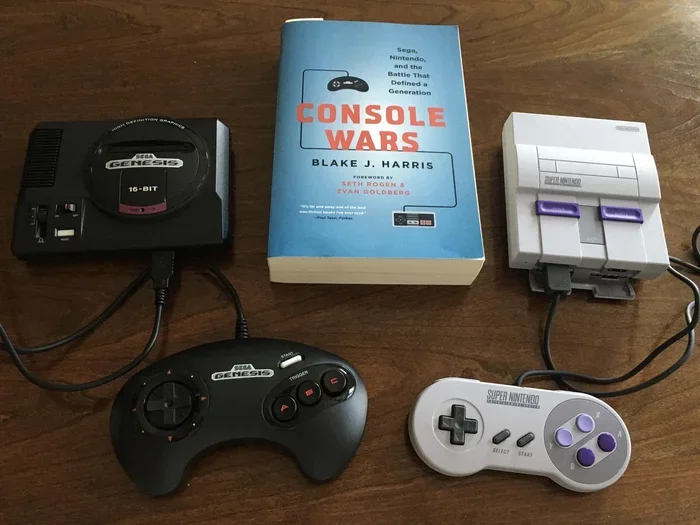
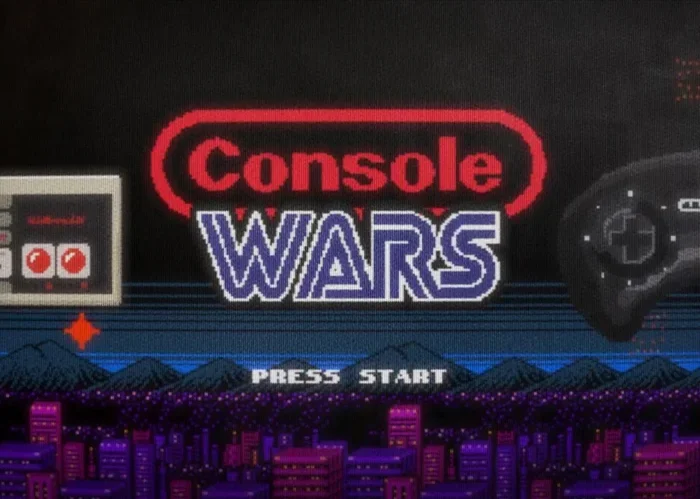
Sega released the Genesis in 1988 (1990 in North America). It used a 16‑bit processor, doubling the power of Nintendo’s 8‑bit NES. The Genesis sold 30 million units worldwide. Nintendo answered with the Super Nintendo Entertainment System (SNES) in 1990. The SNES eventually outsold the Genesis, but the head‑to‑head battle defined a generation.
Visual guide about historic console wars
Image source: images.vimooz.com
Marketing Wars and “Blast Processing”
Sega’s “Genesis does what Nintendon’t” slogan became legendary. The company spent $100 million on advertising in 1992 alone. Nintendo countered with “Play It Loud” campaigns. This marketing duel showed that a nintendo rival can win mindshare through bold messaging, not just hardware.
Sonic vs. Mario – Mascot Showdown
Sonic the Hedgehog debuted in 1991 as Sega’s answer to Mario. Sonic’s speed and attitude appealed to older kids. Mario remained the family‑friendly icon. The mascot war drove both companies to create tighter platformers, better level design, and memorable soundtracks. Sales data: Sonic 1 sold 15 million copies; Super Mario World sold 20 million. The rivalry lifted the entire platformer genre.
Third‑Party Support Shift
Developers like Electronic Arts and Capcom began releasing games on both consoles. Sega’s easier licensing terms attracted many studios. Nintendo’s strict quality checks kept quality high but slowed releases. The competition forced Nintendo to relax some policies, benefiting gamers with a larger library.
The PlayStation Shift – Sony Enters the Arena
CD‑ROM Advantage
Sony launched the original PlayStation in 1994 (1995 in the West). It used CD‑ROMs, holding 650 MB versus 4‑8 MB cartridges. This allowed full‑motion video, orchestral soundtracks, and larger worlds. The PlayStation sold 102 million units, becoming the first console to cross the 100‑million mark. The storage leap made Sony a formidable nintendo rival overnight.
Third‑Party Dominance
Because CDs were cheap to produce, publishers flocked to PlayStation. Titles like Final Fantasy VII, Metal Gear Solid, and Resident Evil became exclusive or timed‑exclusive. Nintendo’s cartridge‑based N64 launched in 1996 with only 38 MB cartridges. The cost gap pushed many developers to Sony, widening the library gap.
Market Share Numbers
By 1999, PlayStation held roughly 55 % of the global console market, while Nintendo’s N64 sat near 20 %. Sega’s Dreamcast, released in 1998, captured 10 % before exiting hardware. The numbers illustrate how a nintendo rival with a better media format can reshape the entire landscape.
Nintendo’s Response – GameCube and Beyond
Nintendo answered with the GameCube in 2001, using mini‑DVDs (1.5 GB). It sold 21 million units, a modest figure. The company learned that media format alone isn’t enough; online services and developer relations matter equally. This lesson shaped the Wii’s motion‑control strategy later.
Microsoft Xbox – The Western Challenger
Online Services and Xbox Live
Microsoft entered in 2001 with the original Xbox. Its killer feature was Xbox Live, a unified online service launched in 2002. By 2005, Live had 2 million subscribers. Nintendo’s online offerings remained fragmented until the Wii’s Nintendo Wi‑Fi Connection in 2006. The early lead gave Microsoft a strong nintendo rival position in online multiplayer.
Halo Factor
Halo: Combat Evolved launched with the Xbox and sold 6.5 million copies. It became the system’s flagship, proving that a single exclusive can drive hardware sales. Nintendo’s Metroid Prime and Super Smash Bros. Melee were strong, but Halo’s cultural impact was unmatched at the time.
Cross‑Platform Play and Game Pass
In the 2010s, Microsoft introduced Xbox Game Pass, a subscription library of over 400 games. By 2023, Game Pass had 25 million subscribers. Nintendo’s Nintendo Switch Online offers a smaller classic library. The subscription model shows how a nintendo rival can change the value proposition for players.
Hardware Parity
The Xbox Series X and PlayStation 5 launched in 2020 with similar specs: 12 TFLOPs GPU, 16 GB GDDR6 RAM, custom SSD. Nintendo’s Switch uses a custom Tegra chip delivering roughly 0.5 TFLOPs in docked mode. The power gap means third‑party AAA titles often skip Switch, reinforcing Microsoft and Sony as the primary nintendo rival for high‑end gaming.
Modern Landscape – Mobile, Cloud, and Indie Rivals
Mobile Gaming Explosion
Smartphones now generate over $100 billion in annual game revenue. Titles like PUBG Mobile, Genshin Impact, and Call of Duty Mobile attract hundreds of millions of players. Nintendo entered mobile with Super Mario Run, Fire Emblem Heroes, and Animal Crossing: Pocket Camp. While successful, these games represent a small slice of the mobile pie. The sheer scale makes mobile a massive nintendo rival for attention and spending.
Cloud Streaming Services
Services such as Xbox Cloud Gaming, NVIDIA GeForce Now, and PlayStation Plus Premium let players stream AAA games to phones, tablets, and low‑end PCs. Latency has dropped below 30 ms in many regions. Cloud removes the need for expensive hardware, turning any screen into a potential console. This technology is a new kind of nintendo rival that competes on accessibility rather than raw specs.
Indie Games and Digital Storefronts
Platforms like Steam, the Epic Games Store, and the Nintendo eShop give small teams global reach. Indie hits such as Hollow Knight, Celeste, and Hades have sold millions without a publisher. Nintendo’s own indie showcase, “Indie World,” highlights this trend. The rise of indie titles means a nintendo rival can be a two‑person studio with a great idea.
Subscription and Free‑to‑Play Models
Free‑to‑play games with battle passes (Fortnite, Apex Legends) generate revenue through cosmetics. Nintendo has experimented with free‑to‑play (Pokémon UNITE) but remains focused on premium pricing. The shift toward live services creates a nintendo rival that monetizes engagement over upfront cost.
Why the Rivalry Matters for Gamers
Innovation Drive
Every time a nintendo rival introduces a new feature, Nintendo often follows or improves it. Motion controls (Wii), touchscreen (DS), hybrid design (Switch) all came after competitors tested similar ideas. Competition accelerates the pace of invention.
Price Wars
When Sega priced the Genesis at $189 versus the SNES at $199, consumers benefited. Modern console launches often see price cuts within a year. Subscription services like Game Pass lower the effective cost per game. A healthy nintendo rival keeps prices honest.
Exclusive Libraries
Exclusives define console identity. Mario, Zelda, and Pokémon anchor Nintendo. Halo, God of War, and The Last of Us anchor Microsoft and Sony. The battle for exclusive content gives players distinct experiences and reasons to own multiple systems.
Community and Culture
Rivalries create communities: “Genesis does what Nintendon’t” fans, “PlayStation Nation,” “Xbox Insiders.” These groups share tips, create fan art, and organize tournaments. The cultural conversation around a nintendo rival enriches the hobby for everyone.
Conclusion
The history of the biggest nintendo rival is a story of constant change. From Atari’s early dominance to Sega’s 16‑bit assault, from Sony’s CD‑ROM revolution to Microsoft’s online ecosystem, each challenger forced Nintendo to adapt. Today, mobile phones, cloud streaming, and indie developers join the fray. As a gamer, you win every time a new nintendo rival appears because it means better games, lower prices, and fresh ideas. Keep an eye on the next wave—whether it’s AR glasses, AI‑generated worlds, or something we haven’t imagined yet. The rivalry never ends, and that’s the best news for anyone who loves to play.