
Isn’t it magical how music can light up a child’s world? From bopping along to a catchy tune to attempting their first melody, giving kids the gift of music is a wonderful way to foster creativity, boost cognitive development, and even improve motor skills. But with so many options out there, choosing the best instrument for kids can feel a bit like conducting an orchestra blindfolded!
Don’t worry, we’re here to help you hit all the right notes. We’ve rounded up five fantastic musical instruments perfect for young aspiring musicians, covering different age groups, interests, and learning styles. Let’s dive in and find that perfect first instrument!
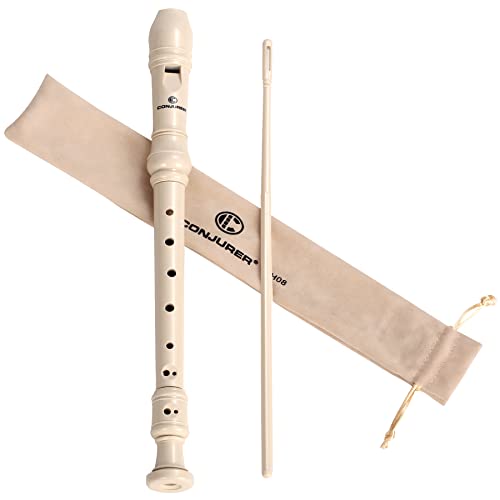
Soprano Recorder Instrument for Kids & Student – German Fingering

This isn’t just any recorder; it’s a beautifully designed instrument from CONJURER that prioritizes comfort and sound quality for young learners. Crafted with environmentally friendly resin and a carbon fiber inner core, it offers a surprisingly rich tone for a beginner instrument. What makes it stand out is its ergonomic design, ensuring little hands won’t tire quickly, making it a fantastic entry point for kids interested in wind instruments and developing breath control.
- Key Features:
- Made with environmentally friendly resin and polymer coating.
- Integrated pouring process ensures no gaps for consistent sound.
- Ergonomically designed for comfortable, fatigue-free use.
- Carbon fiber nanotechnology inner core for superior sound.
- Comes with a faux deerskin storage bag and cleaning rod.
- Available in three colors, polished by hand with no sharp points.
- Pros:
- Excellent sound quality for a beginner recorder.
- Durable and made from safe, eco-friendly materials.
- Comfortable for small hands, reducing fatigue.
- Complete kit with cleaning accessories.
- Great for school band introductions and musical development.
- Cons:
- Requires some initial guidance for proper technique.
- German fingering might be different from other recorder types (e.g., Baroque).
- Might be too advanced for very young toddlers.
- User Impressions: Parents consistently praise this recorder for its robust build and clear, pleasant sound. Many mention it’s a significant step up from basic plastic recorders, making it ideal for kids who are genuinely interested in learning and not just making noise. It’s often recommended by music teachers for its playability.
- Call-to-Action: See it on Amazon here
Kids Musical Instruments, 33Pcs 18 Types Wooden Percussion Set

Ready to create a mini-orchestra right in your living room? This incredible 33-piece percussion set offers a huge variety of instruments, from shakers and tambourines to xylophones and maracas. It’s an absolute treasure trove for preschoolers and toddlers, providing endless opportunities for rhythmic exploration, sensory play, and developing fine motor skills. If you’re looking for the best instrument for kids that encourages group play and a broad introduction to sounds, this set is a winner!
- Key Features:
- A comprehensive set of 33 pieces, including 18 different types of instruments.
- Made from high-quality, non-toxic, and lead-free materials (CPC/ASTM Certified).
- Designed to help children experiment with sounds, beat, and rhythm.
- Comes with a clear, compact backpack for easy cleaning and storage.
- Ideal for creative birthday gifts for young children.
- Pros:
- Huge variety keeps kids engaged and allows for diverse musical exploration.
- Promotes sharing, teamwork, and social development.
- Excellent for developing rhythm, coordination, and auditory skills.
- Safe, durable, and easy to store.
- Suitable for a wide age range within early childhood.
- Cons:
- Can get a bit noisy when all instruments are in use simultaneously!
- Some smaller pieces might require supervision for very young toddlers.
- User Impressions: Families rave about the sheer number of instruments and the joy they bring. Kids love having so many options to choose from, often staging impromptu concerts. Parents appreciate the quality and safety of the materials, noting it’s a fantastic educational tool for early childhood music education.
- Call-to-Action: See it on Amazon here
YEZI Kids Toy Classical Ukulele Guitar Musical Instrument

Introduce your little rockstar to the world of string instruments with this adorable and practical toy ukulele. While it’s designed with kids in mind, it offers a surprisingly realistic feel, making it a perfect stepping stone for future guitarists. It’s lightweight, easy to hold, and helps children learn basic rhythm, strumming, and even some simple chords without the intimidation of a full-sized instrument. It’s definitely one of the best instruments for kids wanting to pluck their way to musical mastery.
- Key Features:
- Mini ukulele toy, perfect for teaching basic rhythm and strumming.
- Made from durable ABS plastic with four carbon nylon strings.
- Coating on strings prevents finger injury.
- Lightweight, small size, and easy to carry.
- Encourages auditory and creativity skills.
- Fully playable and easily tuned for a realistic experience.
- Pros:
- Excellent introduction to string instruments and musical techniques.
- Kid-friendly design and materials (safe strings).
- Portable and encourages on-the-go musical fun.
- Helps develop fine motor skills and hand-eye coordination.
- More engaging than a purely decorative toy instrument.
- Cons:
- As a toy, it won’t have the same sound quality or tuning stability as a real ukulele.
- May require frequent re-tuning if played often.
- User Impressions: Customers love that this ukulele feels like a “real” instrument for kids, not just a plastic prop. Children enjoy strumming along and singing, and parents appreciate how it sparks musical interest without a huge investment. It’s often cited as an ideal gift for birthdays and holidays.
- Call-to-Action: See it on Amazon here
Hape Blues Harmonica | 10 Hole Wooden Musical Instrument

Sometimes, the simplest instruments are the most effective. The Hape Blues Harmonica is a classic choice, offering pitch-perfect sound in a durable, kid-friendly wooden design. It’s fantastic for developing breath control, listening skills, and a sense of melody. With numbered notes to guide beginners, it’s incredibly easy for little ones to pick up and start making joyful sounds, making it a timeless contender for the best instrument for kids who love to blow and play!
- Key Features:
- 10-hole wooden harmonica with pitch-perfect sound.
- Numbered notes for easy learning, perfect for beginners.
- Sturdy and perfectly sized for young hands with widely spaced notes.
- Encourages musical development, exploration, and audio recognition.
- Made with water-based, non-toxic paints and varnishes.
- Pros:
- Easy to learn and play immediately.
- Great for developing breath control and an ear for music.
- Durable wooden construction and safe materials.
- Portable and can be enjoyed anywhere.
- Timeless classic that appeals to many children.
- Cons:
- Limited musical range compared to other instruments.
- Can be loud if multiple children are playing at once.
- User Impressions: Parents and kids alike adore this harmonica. Users consistently mention how quickly children pick it up and enjoy creating their own tunes. Its robust wooden build holds up well to enthusiastic play, and the non-toxic finish provides peace of mind. It’s a popular choice for road trips and quiet play at home.
- Call-to-Action: See it on Amazon here
LOOIKOOS Toddler Musical Instruments International Natural Wood Set

For the youngest musicians, a set of natural wood instruments like this one from LOOIKOOS is an excellent choice. Focusing on shaking, tapping, and beating, these Montessori-inspired toys are perfect for toddlers aged 1-3. They encourage movement, rhythm, and sensory exploration while being crafted from kid-friendly, smooth-finished wood. It’s a wonderful way to introduce early music education and foster a deeper parent-child connection through shared musical moments.
- Key Features:
- Set of shaking, tapping, and beating instruments made from natural wood.
- Montessori-inspired design for toddlers aged 1-3.
- Helps cultivate sensitivity to music, rhythm perception, and hand-to-eye coordination.
- Made with CPC Certified, kid-friendly wood with a smooth finish.
- Comes with a uniquely designed carrying bag for easy storage.
- Ideal for enhancing parent-child relationships through shared play.
- Pros:
- Natural, non-toxic materials are safe for young children.
- Promotes holistic development (motor skills, rhythm, social skills).
- Durable and aesthetically pleasing natural wood design.
- Encourages early musical exploration and creativity.
- Excellent for parent-child bonding through music.
- Cons:
- Fewer distinct instrument types compared to larger percussion sets.
- Might be a slightly higher price point due to natural materials.
- User Impressions: Parents love the natural feel and gentle sounds of this set. Many appreciate the Montessori approach to learning and the fact that the instruments are made from safe, durable wood. It’s often highlighted as a perfect gift for first birthdays, encouraging quiet, imaginative play over loud electronic toys.
- Call-to-Action: See it on Amazon here
Making the Right Choice: Your Child’s Musical Journey
Choosing the best instrument for kids ultimately depends on their age, interest, and your family’s goals. Whether it’s the structured learning of a recorder, the free-form fun of a percussion set, the strumming joy of a ukulele, the classic charm of a harmonica, or the gentle exploration of natural wood instruments, each option offers a unique pathway into the wonderful world of music.
Encouraging a child’s musical development is an investment in their creativity, cognitive abilities, and overall well-being. So go ahead, pick an instrument, and watch your little one’s potential unfold!
Frequently Asked Questions (FAQ)
Q1: At what age should I introduce a musical instrument to my child?
A1: You can introduce musical concepts and simple instruments like shakers or drums as early as infancy! For more structured instruments like a recorder or toy ukulele, ages 3-5 are often ideal, depending on the child’s readiness and fine motor skills. The key is to make it fun and pressure-free.
Q2: What are the main benefits of learning a musical instrument for children?
A2: Learning an instrument offers a wide range of benefits, including improved fine motor skills, enhanced cognitive development (problem-solving, memory), better language and mathematical abilities, increased creativity and self-expression, and boosted self-esteem and discipline. It’s truly a holistic learning experience!
Q3: Should I start with “toy” instruments or “real” ones?
A3: For very young children (toddlers and preschoolers), high-quality toy instruments or scaled-down versions (like a child’s ukulele or a durable recorder) are often the best instrument for kids as they are designed for safety, durability, and ease of use. As a child gets older and shows sustained interest, you can then consider investing in a more professional-grade instrument.
Q4: How can I encourage my child’s interest in music if they don’t seem keen at first?
A4: Keep it light and fun! Play a variety of music at home, sing together, dance, and expose them to different instruments without pressure. Attend child-friendly concerts or musical story times. Sometimes, finding the right teacher or a group setting can also ignite their passion. Never force them; gentle encouragement and a joyful atmosphere are key.
Q5: What’s the difference between a German and Baroque fingering recorder?
A5: These refer to the different fingerings used for specific notes on the recorder. German fingering is generally considered easier for beginners, especially for the F/F# notes, making it a common choice for young students starting in schools. Baroque (or English) fingering is more traditional and offers better intonation for advanced playing. For a beginner child, German fingering is often preferred for its simplicity.
Q6: Are wooden musical instruments safe for toddlers who still put things in their mouths?
A6: Reputable brands (like the LOOIKOOS and Hape products mentioned) ensure their wooden instruments are made with child-friendly, non-toxic, and water-based paints and finishes. They also typically have smooth, rounded edges to prevent injury. Always check for safety certifications (like CPC or ASTM) and supervise young children during play.
Q7: How do I choose the right instrument based on my child’s personality?
A7: Observe your child! If they’re energetic and love to bang and shake, percussion might be perfect. If they enjoy singing or quiet focus, a harmonica or ukulele could be a great fit. If they’re fascinated by wind or blowing, a recorder might appeal. Sometimes, their initial curiosity or a favorite sound can guide you to the best instrument for kids in your home.